K-COT is an FCC technology that converts low-value hydrocarbon streams into ethylene and propylene
- Technology
- KBR Catalytic Olefins Technology

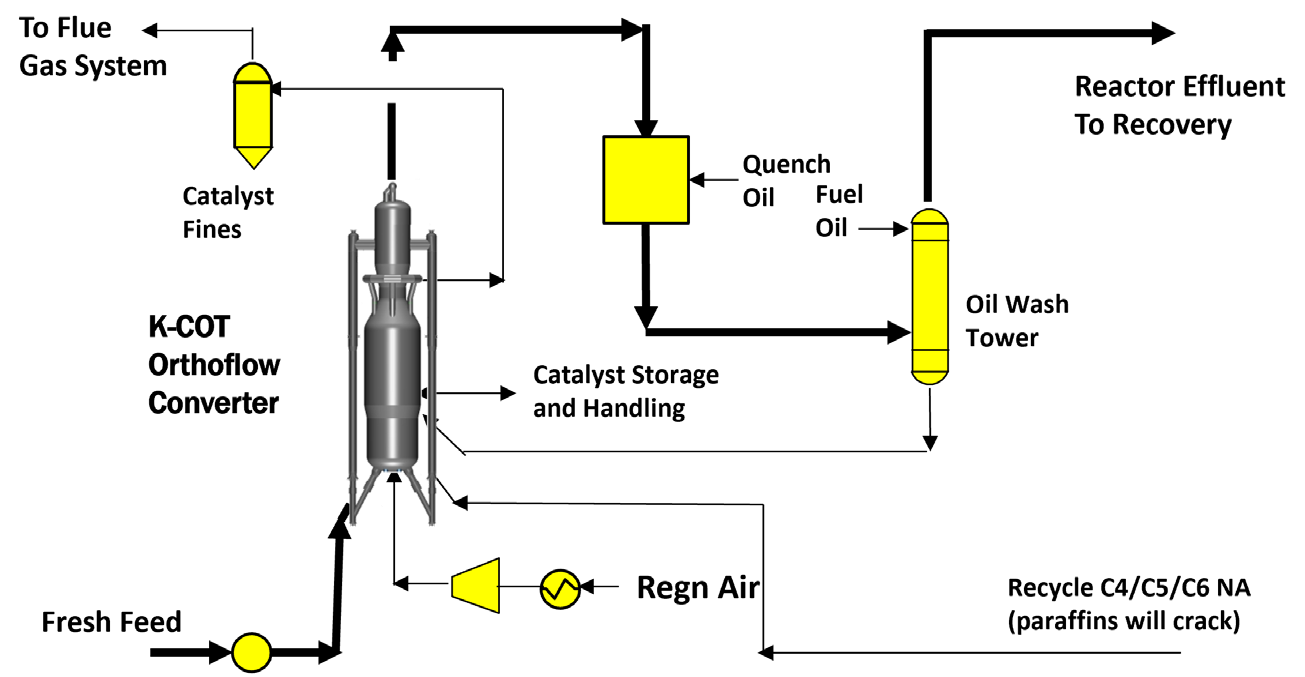
K-COT™ Process Flow Diagram | Source: KBR
K-COT™ (KBR Catalytic Olefins Technology) is a fluidized catalytic cracking process that converts low-value C4–C10 olefinic, paraffinic, or mixed hydrocarbon streams into high-value propylene, ethylene, and aromatics-rich (BTX) gasoline. It couples a proprietary modified ZSM-5 catalyst with KBR’s Orthoflow™ fast-fluidized FCC reactor system, drawing on more than 70 years of KBR fluid-bed reactor design experience and over 100 KBR-designed olefins recovery plants.
K-COT can serve as an alternative to steam cracking for paraffinic feeds such as straight-run naphtha, or as an adjunct “recycle converter” that upgrades low-value steam cracker and refinery by-products (mixed C4s, C5s, cracked naphthas, aromatics raffinate) as well as non-traditional streams (methanol, ethanol, and Fischer-Tropsch or MTO/MTP by-products) — all without feed pretreatment. Compared with steam cracking, it operates at significantly lower temperatures (~600–700 °C vs. >850 °C), delivers a much higher propylene-to-ethylene ratio (~1:1 on paraffinic feeds, up to ~2–2.5:1 on olefin-rich feeds), 10–25% relatively higher light olefin yields, roughly 50% more BTX, and lower cost of production, capital cost, and CO2 emissions.
Continue reading the full K-COT™ technology profile here.
#fluidcatalyticcracking #fcc #orthoflowreactor #zeolitecatalyst #olefins #ethylene #propylene #refineryintegration #kbr #skgroup #ulsancomplex #sasol #olefinicfeed #naphthafeed Gupta, Sanjay
|
K- COT is an interesting process and was examined deeply for Indian refineries/ PC complexes in 2016-17. While the technology held great promise, it could not materialise in projects for variety of reasons.
|