Product
Water
Segment
Utilities
Main-Family
Water & Sewer
Sub-Family
Water
Link
Insight Articles
#PS400

Description

Identity & Basic Chemistry

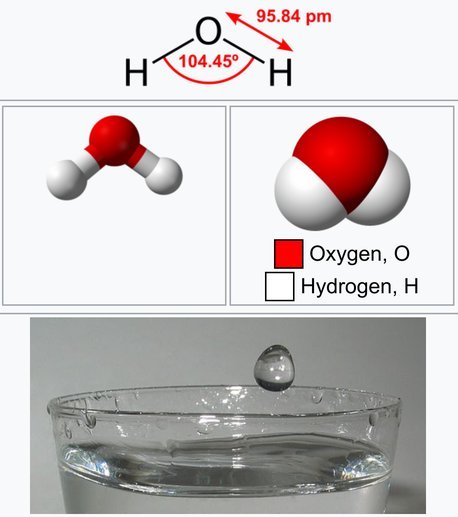
Water is the most abundant and widely used chemical compound on Earth, serving simultaneously as a solvent, reactant, coolant, and energy carrier across virtually every industrial sector. Its CAS number is 7732-18-5, with molecular formula H₂O and a molecular weight of 18.02 g/mol. It is also registered under EC Number 231-791-2 and PubChem CID 962.

Property Value
CAS Number 7732-18-5
Molecular Formula H₂O
Molecular Weight 18.02 g/mol
Melting Point 0.0 °C
Boiling Point 100.0 °C (at 1 atm)
Density (liquid, 25°C) ~0.997 g/cm³
Dynamic Viscosity 0.00089 Pa·s
Dipole Moment 1.80 debye
ΔfH° (liquid) −285.83 ± 0.04 kJ/mol
ΔfH° (gas) −241.83 ± 0.04 kJ/mol
ΔfG° −228.80 kJ/mol
Heat of Vaporization 9.717 kcal/mol (540 cal/g)
Heat of Fusion (ice) 80 cal/g
Cp (liquid, 25°C) ~75.11 J/mol·K
Dielectric Constant (0°C) 87.74

Industrial Roles in Refining & Petrochemicals

Water plays a critical multi-functional role in oil refining and petrochemical manufacturing. Refineries use steam as a heat-transfer medium, apply it in steam stripping and fractionation columns, and rely on it as a coolant throughout the process train. Water is also the primary feedstock for steam-methane reforming (SMR), the dominant route to hydrogen production, and functions as process steam in steam cracking (pyrolysis) of hydrocarbons to produce ethylene, propylene, and other olefins.

Key industrial water grades and functions include:

  • Boiler Feed Water (BFW) — demineralized, deaerated, and pH-controlled (8.5–9.5) for steam generation; silica must be kept below 0.02 ppm to prevent scaling

  • Process Steam — dilution medium in steam crackers to suppress coke formation and control hydrocarbon partial pressure

  • Cooling Water — circulated in cooling towers and heat exchangers; treatment requires biocides, anti-scalants, and corrosion inhibitors

  • Demineralized / Ultra-Pure Water — produced via reverse osmosis (RO) + ion exchange for high-purity applications (pharmaceuticals, semiconductors, boiler systems)

  • Wash Water — crude desalting, caustic washing of refinery streams


Water Treatment Technologies

Industrial water must be conditioned to meet specific quality specs before use. Common treatment unit operations include:

  • Reverse Osmosis (RO) — removes ~98% of dissolved solids including sodium

  • Ion Exchange / Demineralization — produces deionized or ultra-pure water

  • Ultrafiltration (UF) — removes suspended and colloidal solids down to 0.01 µm

  • Deaeration — removes dissolved O₂ and CO₂ to prevent corrosion in boiler systems

  • Chemical dosing — pH adjustment (lime, caustic), anti-scalants, flocculants, coagulants, biocides, chlorine/chlorine dioxide/ozone/UV disinfection


Grades & Specifications

Grade Key Parameters Typical Use
Potable / Drinking Cl₂ residual, turbidity, microbiological Site utilities, sanitation
Cooling Water Hardness, TDS, biocide levels Heat exchangers, cooling towers
Boiler Feed Water pH 8.5–9.5, silica <0.02 ppm, O₂ <7 ppb Steam generation
Demineralized TDS <1 ppm, conductivity <0.1 µS/cm High-pressure boilers, process
Ultra-Pure (UHP) Conductivity ~0.055 µS/cm (theoretical) Semiconductors, pharma
HPLC Grade Organic-free, UV-transparent Analytical laboratories

Insight Articles
Your insights will be shown here

Settings

Status
A
Unit of Measure
Metric tonne (1,000 kg)
Physical State

Liquid

Content provided by
Transaction Name Date
Modified by UserPic  Kokel, Nicolas 4/27/2026 3:52 PM
Added 7/2/2022 3:37 PM
Map of Water Products producing locations in ppPLUS

ppPLUS Insights: Please register to view the Map!
Production Analysis