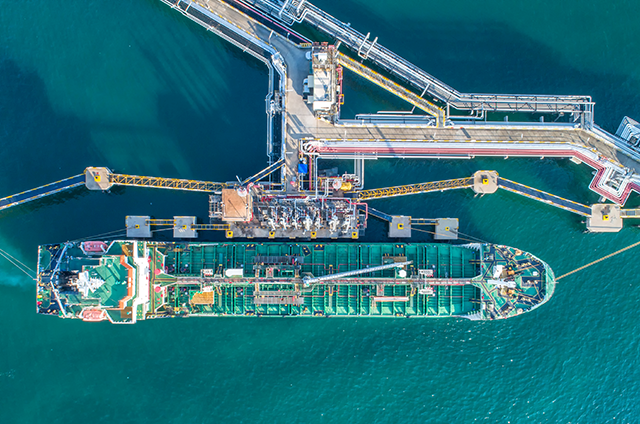
The Dagang site is Sinopec Tianjin Petrochemical’s established refining and petrochemical production base in Dagang, Binhai New Area, Tianjin. The site has road and railway connections with central Tianjin and Tanggu New Port and pipeline connections with the Nanjiang Petrochemical Terminal at Tianjin Port.
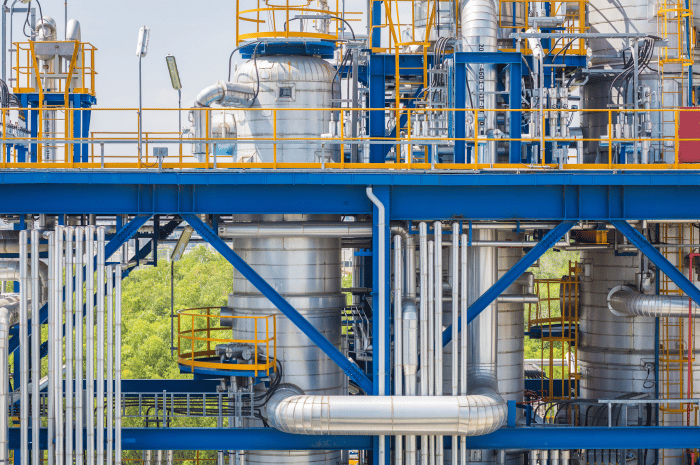
Dagang is configured around an integrated crude-oil refinery with downstream chemical, synthetic-fibre and polyether activities. Its refining configuration includes crude and vacuum distillation, catalytic cracking, hydrocracking, hydrofining and hydrotreating, delayed coking, desulphurisation and sulphur recovery. Supporting operations include thermal power, water systems, storage, transport and other offsites.
Feedstocks and refinery configuration
The refinery processes crude oil. Platts reported in 2006 that the Dagang operation consumed predominantly imported crude and that the expansion was designed to provide sour-crude processing capability. The expanded refining system was also intended to produce naphtha feedstock for the associated one-million-tonne/year ethylene project.
These are confirmed characteristics of the expansion design, but the sources do not establish the site’s present crude slate, imported-crude proportion or annual feedstock requirement.
The refining scheme combines primary distillation with conversion and product-treating facilities. Catalytic cracking and hydrocracking convert heavier fractions into lighter products, while hydrofining and hydrotreating remove contaminants and improve product quality. Delayed coking and sulphur recovery were included in the major expansion programme.
Historical assets and expansion
Before the 2006 expansion programme, Platts reported the following operating assets:
| Pre-expansion asset |
Reported capacity |
| Two crude-distillation trains with vacuum distillation |
2.5 million t/y each |
| Catalytic cracker |
1.2 million t/y |
| Hydrocracker |
800,000 t/y |
| Hydrofining unit |
400,000 t/y |
| Desulphurisation unit |
150,000 t/y |
| Existing ethylene capacity |
200,000 t/y |
The expansion programme was launched on 26 June 2006. It comprised refining, ethylene, thermal-power and offsite developments. Guangming Daily reported main construction investment of RMB 26.8 billion, rising to approximately RMB 34 billion including supporting projects.
The principal refining projects announced in 2006 were:
| Expansion asset |
Announced capacity |
| Crude-distillation unit with vacuum distillation |
10 million t/y |
| Delayed coker |
2.3 million t/y |
| Hydrocracker |
1.8 million t/y |
| Gasoil hydrofining unit |
3.2 million t/y |
| Waxy-oil hydrotreating unit |
1.2 million t/y |
| Sulphur-recovery unit |
260,000 t/y |
On 21 December 2009, the supporting ten-million-tonne/year refining project completed its full process flow and produced qualified products. The sources do not provide individual commissioning dates for each conversion and treating unit.3
Platts reported that one older crude and vacuum-distillation train would be phased out and that the programme was expected to leave Tianjin with 12.5 million tonnes/year of refining capacity. Guangming Daily subsequently reported 15 million tonnes/year of primary processing capacity after completion. These figures use different descriptions and should not be combined or treated as equivalent measurements.
The general company description currently lists 12.5 million tonnes/year of comprehensive crude-processing capacity and 34 refining units, but it does not provide an asset-by-asset breakdown or a reference date for these totals.
Petrochemical development and ownership boundary
The petrochemical portion of the 2006 programme included a one-million-tonne/year ethylene plant. Announced associated projects included a 600,000-tonne/year gasoline-processing unit, 300,000 tonnes/year each of LDPE and HDPE, and 450,000 tonnes/year of polypropylene.
Guangming Daily reported that the completed programme would raise Tianjin’s ethylene capacity from 200,000 tonnes/year to 1.2 million tonnes/year and provide annual output of 5.87 million tonnes of refined fuels, 3.2 million tonnes of basic chemical raw materials, 1.5 million tonnes of synthetic resins and chemical fibres, and 750,000 tonnes of other products including LPG.
These are historical programme figures. The one-million-tonne/year ethylene project and its associated polyolefin assets should not be entered as wholly owned current SPC Tianjin capacity because they fall within the SSTPC ownership perimeter. The ethylene figure must also not be added to the separate SIPC Nangang cracker.
Technology and licensors
Guangming Daily reported equipment-localisation rates of 91.5% for refining and 78% for ethylene. These figures concern domestically manufactured equipment and do not establish the origin or ownership of the process technologies.
Products
Dagang’s product base covers petroleum products, petrochemicals and synthetic fibres. Gasoline and diesel meet China VI specifications, and the business supplies ethanol gasoline. The general company description also lists para-xylene, polyester, polyester staple fibre and polyether, with respective capacities of 380,000, 200,000, 100,000 and 100,000 tonnes/year.
Because the general description combines Dagang and Nangang, these chemical capacities require unit-level confirmation before being entered as a complete current Dagang asset register.
Sources
- Platts. Sinopec launches Tianjin refining, petrochemical expansion plan (Jun 27, 2006)
- Yang Xin, Guangming Daily. 天津百万吨乙烯工程 [Tianjin one-million-tonne ethylene project] (Jan. 21, 2010)