INEOS Walks Away from Tianjin Ethylene Venture, Leaving Sinopec in Full Control

- Site
- SIPC Tianjin

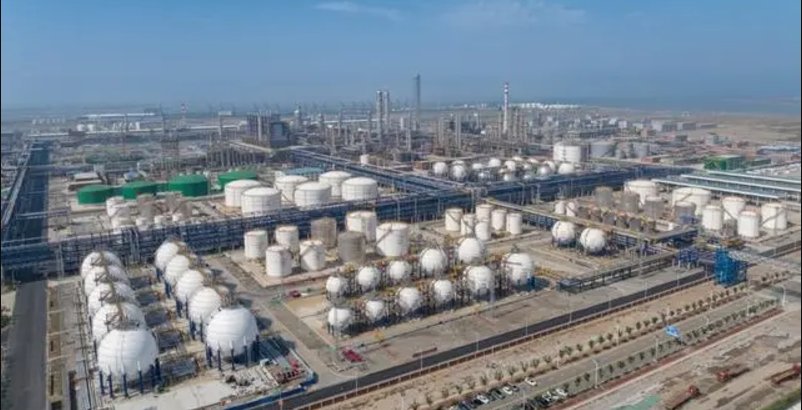
Photo: SIPC Tianjin Ethylene project aerial view | Jimu News (Nov 14, 2024)
What was agreed
INEOS disclosed the exit in its second-quarter 2026 results, published in late July, with coverage following on August 3. The exit agreements with Sinopec were signed in June 2026, after about seven months of talks. INEOS had first signalled publicly that it wanted out in November 2025.
Under the terms, INEOS will pay Sinopec $120 million in 24 equal monthly installments, starting in March 2027. INEOS has also removed its 50% stake in the venture, along with the matching financial liability of roughly €575.7 million, from its balance sheet.
The venture and its future identity
The venture, Sinopec INEOS (Tianjin) Petrochemical Co., Ltd., operates the Tianjin Nangang ethylene project. The site covers 162.2 hectares and comprises a 1.2 million tonnes per year ethylene cracker plus 13 downstream units. Core units started up at the end of 2024, and the plant ran on 100% green electricity in 2025. In June 2026 it shipped 5,000 tonnes of ethylene to South Korea, the first ethylene export through Tianjin port. Sinopec will now own and run the project alone.
Why INEOS left
The main driver is a weak Chinese market. Overcapacity, soft demand and growing domestic olefin output have squeezed margins, and the project's long-term returns fell short of expectations. INEOS says it stopped having significant influence over the venture during the negotiations and reclassified it as an "other investment" in September 2025.
The wider picture matters too. The Shanghai SECCO venture with Sinopec lost €38.1 million in Q2 2026, a narrower loss than a year earlier but still a loss. Meanwhile, INEOS is trimming weak assets globally, including closing a 430,000 tonne styrene plant in Canada and planning to shut a 400,000 tonne polystyrene unit in the US in Q4 2026.
What it means for INEOS
The exit removes a large liability. S&P Global Ratings said it no longer counts the roughly €0.6 billion contingent liability from Tianjin in INEOS's adjusted debt, and it raised its outlook on INEOS Group Holdings to stable from negative. S&P assumes the $120 million is paid between 2027 and 2028.
The timing helps. INEOS reported Q2 EBITDA of €1.133 billion, against €312 million a year earlier, helped by Middle East disruption. That gives it room to absorb the exit cost.
INEOS is not leaving China. It still runs a 600,000 tonne ABS joint venture in Ningbo and, in May 2026, formed a RMB 1.68 billion high-performance materials venture with Sinopec in Tianjin through INEOS Styrolution. The strategy is clear: less bulk petrochemicals, more specialty materials.
What it means for Sinopec
Sinopec gains full control of a modern, integrated and low-carbon asset, plus the export business it has begun building. It also carries the full operating burden in a market where margins are thin. Some reports say Sinopec will coordinate second-phase expansion and supply chain upgrades alone, though I could not verify this in company filings. The $120 million received over two years offers modest compensation.
Outlook
Operations at Tianjin are expected to continue unchanged, and regional supply should not be disrupted. The larger question is whether other foreign chemical groups, already retreating from high-cost regions, will follow INEOS in reducing exposure to China's commodity petrochemicals.
Sources: INEOS Q2 2026 trading statement and interim report; S&P Global Ratings; ChemNet; ECHEMI.
#ineos #sinopec #ethylene #tianjin #china #sipc