SIBUR Starts Russia's First 1-Hexene Production with Proprietary HEXSIB Technology

- Site
- Nizhnekamskneftekhim

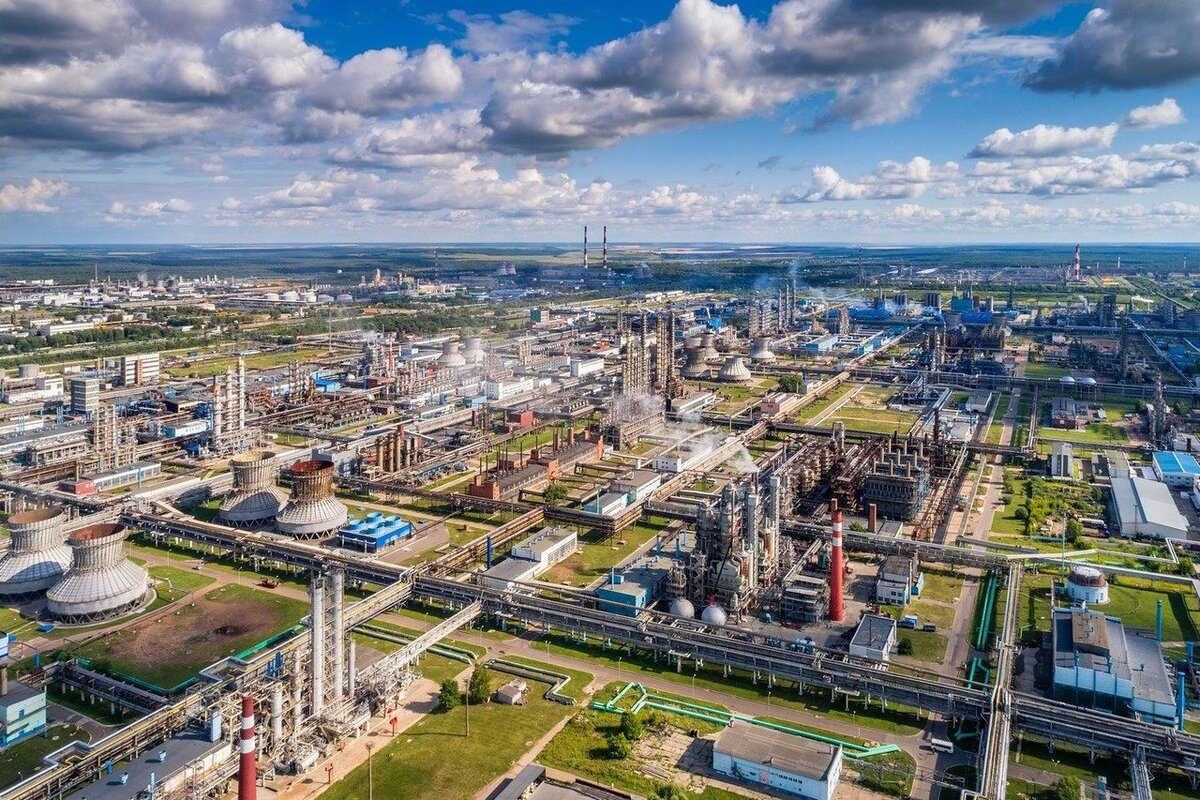
Article image: Nizhnekamskneftekhim facility from public sources
Russia has joined the small group of countries producing on-purpose 1-hexene using domestically developed technology. In August 2025, SIBUR commissioned a 50,000 tonnes/year 1-hexene unit at Nizhnekamskneftekhim (NKNH) in Tatarstan, using the company's proprietary HEXSIB process developed at its NIOST R&D center.
The move eliminates Russia's dependence on imported 1-hexene, a critical comonomer for producing high-performance LLDPE and HDPE grades. Until now, SIBUR sourced hexene from Western Europe; the NKNH unit covers 125-130% of the company's current demand and positions Russia alongside the United States (CPChem), France (Axens), and China (Sinopec, PetroChina) with indigenous 1-hexene technology.
HEXSIB technology employs selective ethylene trimerization using a microwave-activated chromium catalyst system to achieve >99.7% 1-hexene purity at relatively mild operating conditions (30-70 bar, 40-90°C). The process is integrated directly with NKNH's EP-600 ethylene plant, creating a tightly coupled olefins-to-specialty-PE value chain at a single site.
SIBUR has partnered with Technip Energies to license HEXSIB globally, framing the technology not just as import substitution but as a commercially competitive platform with lower energy intensity and potential compatibility with bio-based ethylene feedstocks.
The HEXSIB deployment follows a broader pattern in the global petrochemical industry. China has systematically developed indigenous comonomer and catalyst technologies over the past decade, reducing reliance on Western licensors for high-value polymer intermediates. Russia's approach with HEXSIB—and parallel work on domestic metallocene catalysts—reflects a similar strategic priority: controlling the specialized inputs that determine access to premium polyolefin markets.
For SIBUR, the NKNH unit is both a supply-chain solution and a technology validation. Successful commercial operation of HEXSIB demonstrates that Russia's R&D infrastructure can move from laboratory concepts to implementable industrial processes in strategically sensitive areas, reducing exposure to external supply disruptions or licensing constraints in future specialty polymer expansion.
#sibur #nizhnekamskneftekhim #technipenergies #hexene #comonomer #technologyindependence #selfsufficiency #russia