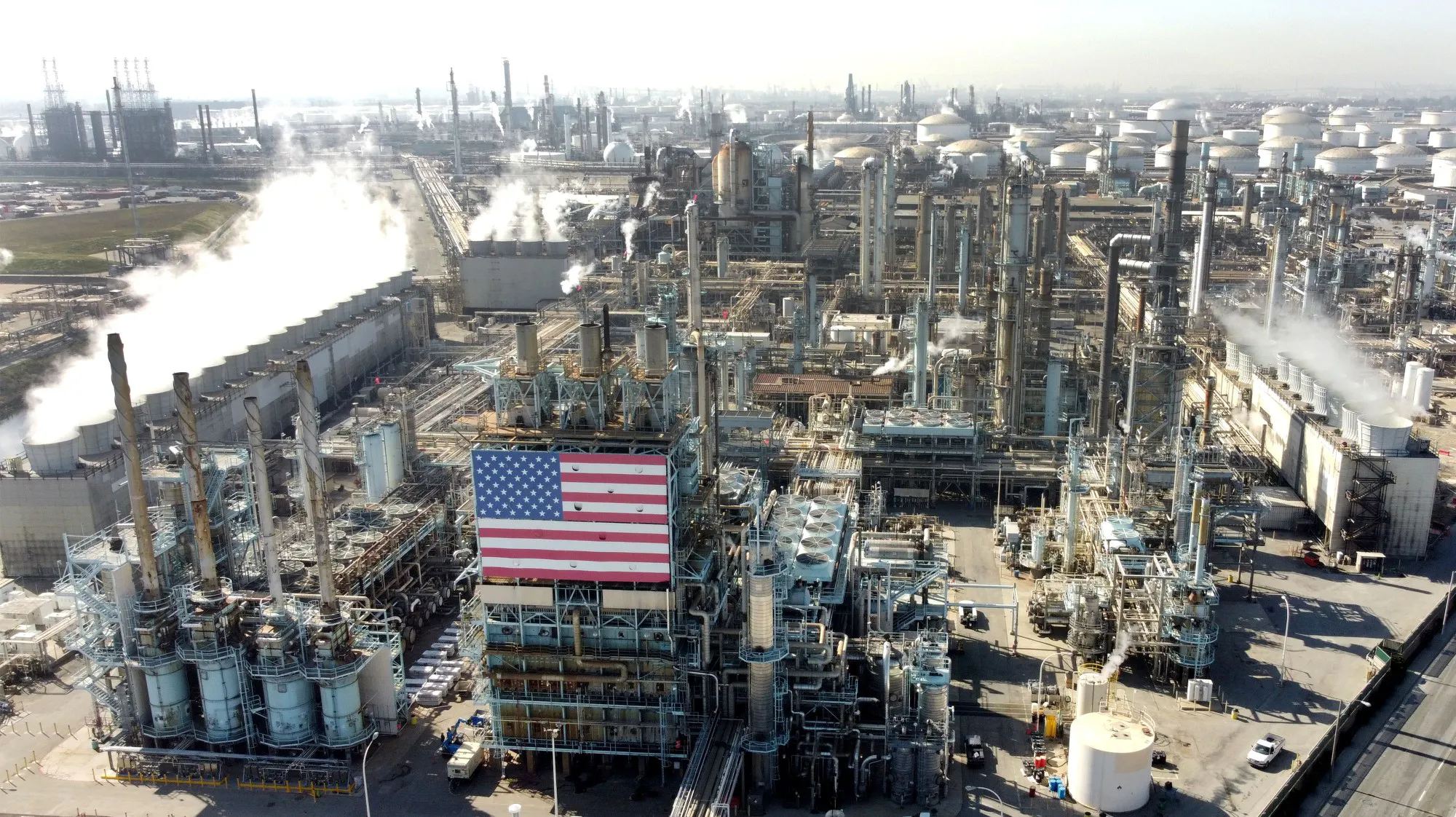
Carson refinery, one of two adjacent refineries forming the Los Angeles Complex | Source: dailybreeze.com (Aug 2026)
The Marathon Los Angeles Refinery (LAR) is the largest petroleum refining complex on the West Coast of the United States, boasting a combined crude oil capacity of 363,000 barrels per calendar day (bpcd). Located in the South Bay area of Los Angeles County across two highly integrated facilities in Carson and Wilmington, California, the refinery plays a vital role in the energy security of the Pacific Northwest and Southwest regions (PADD V).
Originally operated as separate facilities by BP (Arco) and Shell/Tesoro, the two sites were integrated into a single operating complex in 2013 under Tesoro (later Andeavor, acquired by Marathon Petroleum Corporation in 2018). The refinery features a deep-conversion, high-complexity configuration (Nelson Complexity Index > 14) that allows it to process heavy, high-sulfur crude slates into ultra-clean transportation fuels. As California pursues aggressive decarbonization goals, LAR is increasingly focused on energy efficiency, emissions reduction compliance (such as SCAQMD Rule 1109.1), and integrating renewable power and low-carbon feedstocks.
Key Information
- Unmatched Scale: At 363,000 bpcd*, LAR is the largest refining asset in PADD V, supplying a significant portion of California’s highly regulated, low-emission fuels.
- Highly Integrated Dual-Site Infrastructure: The Carson and Wilmington plants operate as a single refinery, connected by a dedicated pipeline network that optimizes feedstock allocation, intermediate streams, and product blending.
- Deep-Conversion Capabilities: Equipped with substantial delayed coking, fluid catalytic cracking (FCC), hydrocracking, and hydrotreating units, the refinery can convert cheap, heavy, high-sulfur crudes into high-value products.
- Premium Product Portfolio: The refinery primarily produces California Air Resources Board (CARB) gasoline, CARB diesel, and commercial-grade jet fuel, serving major regional hubs like Los Angeles International Airport (LAX).
- Decarbonization and Regulatory Pressures: To operate in Southern California, LAR must navigate some of the strictest environmental regulations in the world, requiring continuous multi-million dollar investments in NOx reduction and carbon intensity mitigation.
Refinery History & Integration
The Marathon Los Angeles Refinery is the result of a landmark integration of two historically distinct refining assets:
- The Carson Plant: Originally built in 1938 by Richfield Oil (later ARCO/BP), this facility was acquired by Tesoro Corporation in 2013 for $2.5 billion.
- The Wilmington Plant: Originally built by Shell, this plant was acquired by Tesoro in 2002.
In 2013, Tesoro received regulatory approval to physically and operationally connect the two adjacent facilities, creating the unified Los Angeles Refinery. Through subsequent corporate rebranding and acquisitions, the complex became an Andeavor asset in 2017, and finally joined the Marathon Petroleum Corporation (MPC) portfolio in 2018.
By linking the two plants via pipelines, Marathon eliminated redundant processing steps, optimized storage tank utilization, and created a highly flexible refining system where intermediate streams (such as gas oils and atmospheric residues) are routed to the most efficient conversion units across either site.
Feedstock Profile and Logistics
The refinery is configured to process a diverse and heavy crude slate:
- Crude Capacity: 363,000 bpcd (approximately 383,000 barrels per stream day).
- Feedstock Types: Heavy crude oils from California’s San Joaquin Valley, Alaska North Slope (ANS) medium sour crude, and foreign imports (primarily heavy, sour varieties from South America, Canada, and the Middle East).
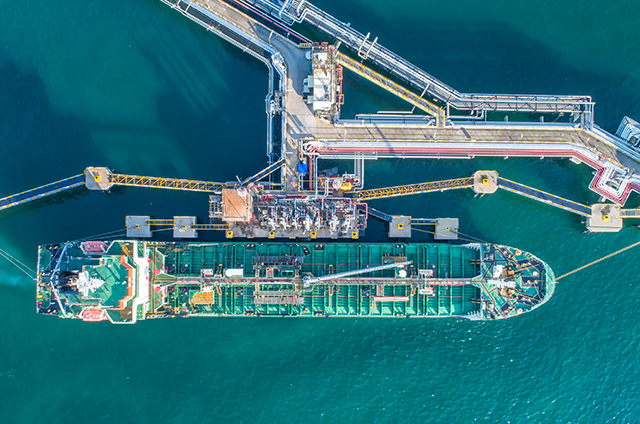
- Logistics Infrastructure: The refinery is directly connected to the Port of Los Angeles and Port of Long Beach marine terminals, permitting high-volume crude imports. It also utilizes local pipeline connections and extensive on-site storage to manage feedstocks seamlessly.
Refinery Configuration & Key Process Assets
LAR is a highly complex, deep-conversion refinery. While Marathon does not disclose individual licensed technologies for every sub-unit, the integrated complex utilizes standard, state-of-the-art process units to maximize clean product yields:
| Process Unit |
Approximate Capacity |
Function / Technology Notes |
| Crude Distillation (CDU) |
~363,000 bpcd |
Split across Carson and Wilmington; performs atmospheric and vacuum distillation of raw crudes. |
| Delayed Coking |
~55,000 – 60,000 bpd |
Located primarily at the Carson plant; thermal cracking of heavy vacuum residue into light products and petroleum coke. |
| Fluid Catalytic Cracking (FCC) |
~100,000 bpd |
Splitting heavy gas oils into high-octane gasoline blendstocks and light olefins. |
| Hydrocracking |
~50,000 bpd |
High-pressure catalytic cracking using hydrogen, yielding high-quality diesel and jet fuel components. |
| Catalytic Reforming (CCR) |
~60,000 bpd |
Converts low-octane naphtha to high-octane aromatics (reformate) while producing hydrogen for hydroprocessing. |
| Alkylation (Sulfuric Acid) |
~25,000 bpd |
Combines olefins and isobutane to produce premium, low-vapor-pressure alkylate for CARB gasoline. |
| Hydrotreating Units |
Extensive |
Desulfurizes naphtha, kerosene, diesel, and FCC feed to meet ultra-low sulfur fuel standards. |
Portfolio of Products
The refinery's product slate is engineered to meet the stringent environmental specifications of the California market:
- CARB Gasoline: Formulated with low vapor pressure and low sulfur content to comply with California Air Resources Board rules.
- CARB Diesel: Ultra-low sulfur diesel (ULSD) engineered for local municipal and commercial transportation sectors.
- Jet Fuel: High-purity commercial aviation fuel, pumped directly via pipelines to regional airports including LAX.
- Petroleum Coke: High-quality anode and needle coke produced in the delayed cokers, exported for use in aluminum and steel manufacturing.
- Propylene & Sulfur: Petrochemical feedstocks and elemental sulfur recovered during the desulfurization process.
Decarbonization & Development Projects
Operating in the South Coast Air Basin requires relentless focus on emission reductions and efficiency. Notable projects include:
- LARIC (Los Angeles Refinery Integration and Compliance) Project: A multi-phase capital project designed to further integrate Carson and Wilmington operations, improve energy efficiency, reduce greenhouse gas emissions, and lower criteria pollutants.
- SCAQMD Rule 1109.1 Compliance: Marathon is investing heavily in Selective Catalytic Reduction (SCR) technology and ultra-low NOx burners across its heaters and boilers to comply with the South Coast Air Quality Management District’s landmark emissions reduction rule.
- Renewable Energy Integration: Marathon has explored co-processing renewable feedstocks (like vegetable oils and animal fats) within existing hydrotreaters to produce renewable diesel, alongside installing solar power generation to offset grid electricity consumption at the Carson site.
Open Questions & Industry Debates
- The Pace of California's Energy Transition: California has mandated a phase-out of new internal combustion engine (ICE) passenger vehicles by 2035. How will LAR balance long-term capital investments in gasoline production units against declining domestic demand?
- Biofuel Conversion Potential: While Marathon successfully converted its Martinez, CA refinery into a 100% renewable fuels facility, it remains debated whether portions of the massive LAR facility will undergo a similar total conversion or if it will maintain a hybrid petroleum/renewable co-processing model.
- Compliance Cost vs. Profitability: The extreme costs of complying with tightening SCAQMD rules and the California Cap-and-Trade program place high pressure on refining margins, raising questions about the long-term economic viability of heavy-conversion refining in the state.
References