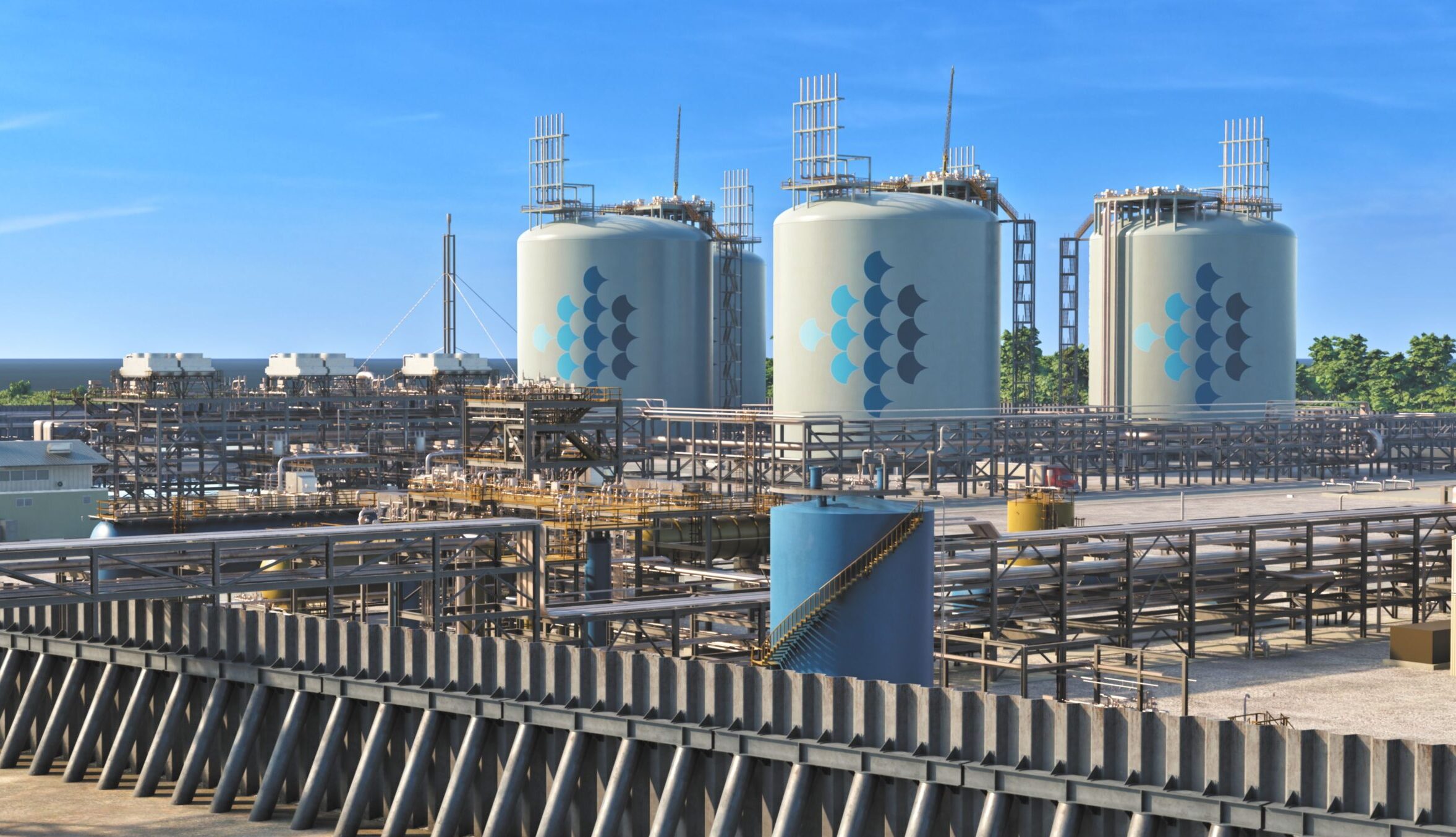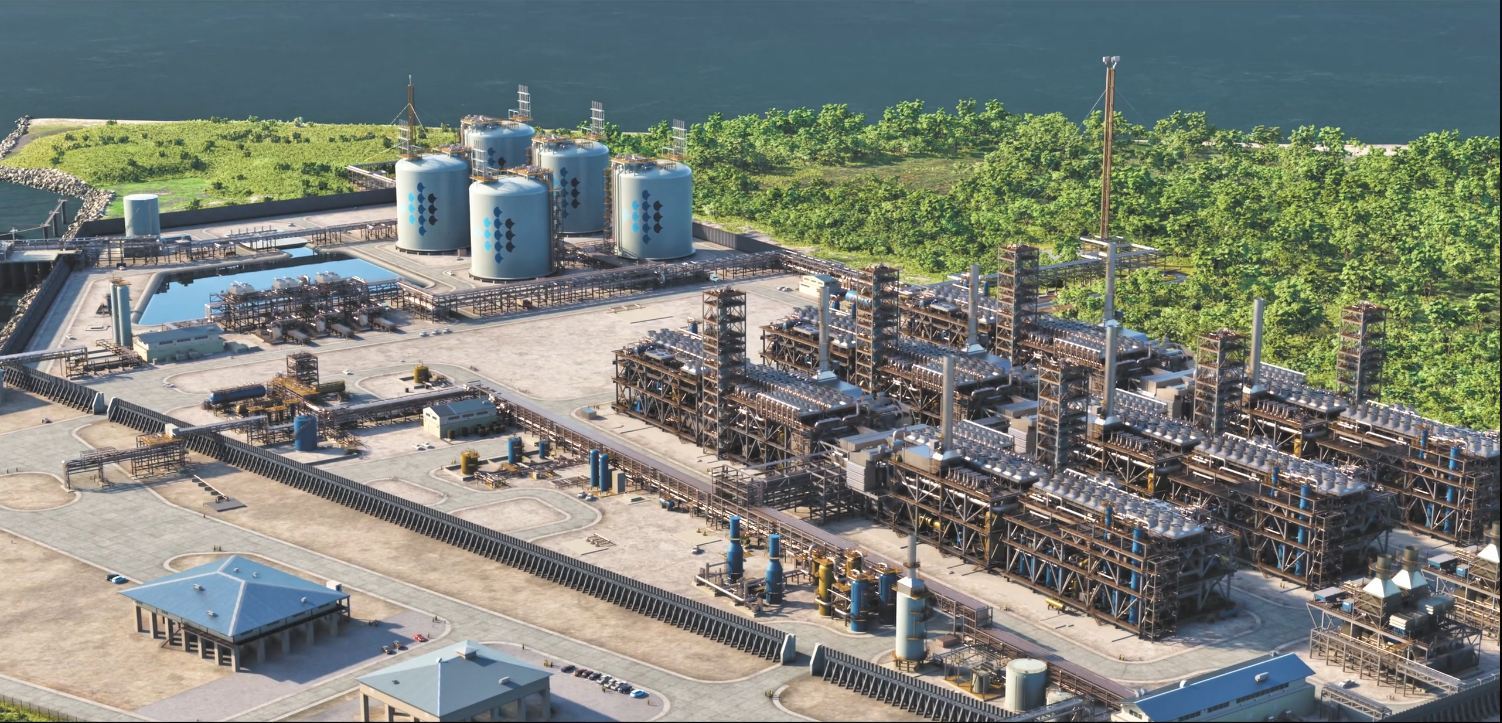
Commonwealth LNG facility rendering | Caturus corporate video
The Commonwealth LNG facility is located at 500 Gulf Beach Highway, Cameron, Louisiana 70631, in south-central Cameron Parish, on the west bank of the Calcasieu Ship Channel at its entrance to the Gulf of Mexico.
Location & Geography
The site sits in the southwestern tip of Louisiana's Gulf Coast, in one of the most LNG-dense industrial corridors in the United States — the same Calcasieu Ship Channel corridor that hosts Cameron LNG, Sabine Pass LNG (Cheniere), and the emerging Lake Charles LNG project. The Calcasieu Ship Channel provides direct deep-water access to the Gulf of Mexico, enabling the terminal to accommodate the world's largest LNG carriers without tidal or navigational constraints.
Site Infrastructure
The facility footprint of 118.8 acres will host the full liquefaction and export complex. Key infrastructure components include:
- Six liquefaction trains, each with a nominal capacity of 1.4 mtpa (total ~9.5 mtpa combined nameplate output)
- Five LNG full-containment storage tanks of 50,000 m³ each, providing a total working storage volume of 250,000 m³
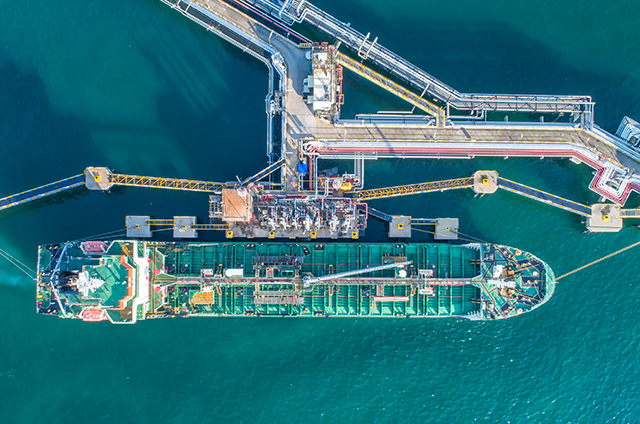
- One marine berth capable of accommodating LNG carriers up to 216,000 m³ capacity (covering the full range from small-scale to Q-Flex class vessels)
- A 30-inch-diameter natural gas feed pipeline, extending 3.04 miles north from the facility to interconnect with two major existing gas transmission systems in Cameron Parish
Gas Supply Access
The 3-mile pipeline connects the site to two major pipeline systems with significant excess transportation capacity, providing reliable and diversified natural gas feed from the broader U.S. pipeline grid. This relatively short pipeline distance is a notable site advantage, minimizing gas transportation cost and infrastructure risk compared to LNG facilities farther inland.
Site Advantages
Cameron Parish's position at the mouth of the Calcasieu Ship Channel offers a combination of deep natural draft, minimal transit distance to open water, established LNG industrial infrastructure, and an experienced local workforce — all factors that contributed to the site selection and FERC approval. The area is one of the most LNG-permitting-friendly jurisdictions in the U.S., with a well-established regulatory and community framework for large-scale energy infrastructure.