
Product
Ground Calcium Carbonate
Abbreviation
GCC
Names
Heavy Calcium Carbonate; Natural Calcium Carbonate; Calcite Powder; Marble Powder
Insight Articles
#PS786
calciumcarbonate groundcalciumcarbonate heavycalciumcarbonate calcite marble calcitepowder naturalcalciumcarbonate gcc limestone
Main Product
Calcium Carbonate
Segment
Chemicals
Main-Family
Inorganics
Sub-Family
Inorganic Carbonates
Physical State

Solid

Description

Ground Calcium Carbonate (GCC) is a mechanically processed form of calcium carbonate produced by the dry or wet grinding of naturally occurring carbonate minerals, principally calcite-rich limestone, marble, or chalk. Unlike PCC, GCC is not chemically transformed during processing; it retains the original mineralogy and crystal structure of the source rock, with its properties determined primarily by the quality of the natural feedstock and the fineness of grinding. GCC is distinguished by its high surface hydrophilicity, ease of dispersibility, relatively low hardness, and large filling capacity, making it the most widely used mineral filler in industrial applications.

Production Process

GCC is produced by two main routes:​

  • Dry grinding — using ball mills, Raymond mills, vertical stirring mills, or jet mills combined with air classifiers; yields products typically from 40 µm down to 2 µm (d50)
  • Wet grinding — slurry milling for ultra-fine grades below 2 µm; produces slurry or filter-cake products further dried to powder form

Physical & Chemical Properties

Property Value
Appearance White to off-white powder
Purity (CaCO₃) 95–99.5%
Median particle size (d50) 2.5–100 µm(typical range)
Brightness (ISO) 88–97%
Density 2.70–2.75 g/cm³
Bulk density 700–1,200 kg/m³
Mohs hardness 3 (calcite source)
pH (slurry) 8.5–9.5
Solubility in water ~15 mg/L (insoluble for practical purposes)
Melting point Decomposes at ~825°C
Moisture content <0.5% (dry grade)


Commercial Grades

GCC is sold in a range of particle size grades tailored to end-use requirements:​

Grade d50 (µm) Typical Application
Coarse 40–100 Road base filler, agricultural lime
Standard 10–40 Construction, asphalt, rubber
Fine 3–10 Paints, adhesives, sealants
Ultrafine 1–3 Paper coatings, plastics, cables
Micronized <1 Specialty coatings, microporous films


Surface-treated (coated) grades using stearic acid or other fatty acids are available for improved polymer compatibility.

Applications

  • Paper and board (filler and coating pigment)
  • Plastics and PVC (filler and impact modifier)
  • Paints and coatings (extender pigment)
  • Rubber and cable insulation
  • Adhesives and sealants
  • Agriculture (soil amendment)
  • Construction mortars and concrete

References

  1. Chemical Book. Ground calcium carbonate (CaCO3) (Accessed Mar 12, 2026)
  2. ATAMAN CHEMICALS. Calcium Carbonate (Accessed Mar 12, 2026)
  3. European Union Joint Research Centre (Jan 1, 2011). GCC dry; Ground Calcium Carbonate (GCC)
  4. Wikipedia. Calcium carbonate (Page version: Feb 20, 2026)

Insight Articles
Your insights will be shown here

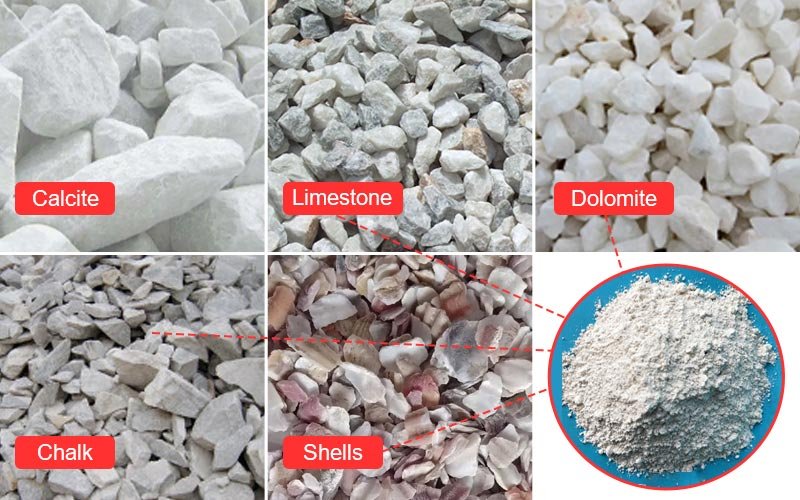
Raw materials of heavy calcium carbonate | Source: DASWELL https://daswell.com/blogs/understanding-heavy-calcium-carbonate-from-six-perspectives/
Identifiers

logo CAS Number
1317-65-3
logo EC Number
215-279-6
logo ECHA InfoCard
100.013.741
logo IUPAC Name
Calcium carbonate
logo PubChem ID
10112
Chemical Data

Chemical Formula

CaCO3

Molecular Weight (g/mol)
100.09
Melting Point (°C)
825
Sulfur Content (wt%)
0
Specific Gravity
2.73
Crude Data

API Gravity
-79.57
Country
Product Settings

Default
Status
A
Content provided by
Transaction Name Date
Modified by UserPic   Kokel, Nicolas 3/12/2026 12:59 PM
Added by UserPic   Kokel, Nicolas 3/8/2026 8:54 PM