
Product
Bauxite Residue
Names
Red Mud; Bauxite Tailings; Red sludge; Alumina Refinery Residues; Processed Bauxite
Insight Articles
#PS755
Main Product
Muds and Sludges
Segment
Unallocated
Main-Family
Others
Sub-Family
Chemical Waste
Physical State

Mixed

Description

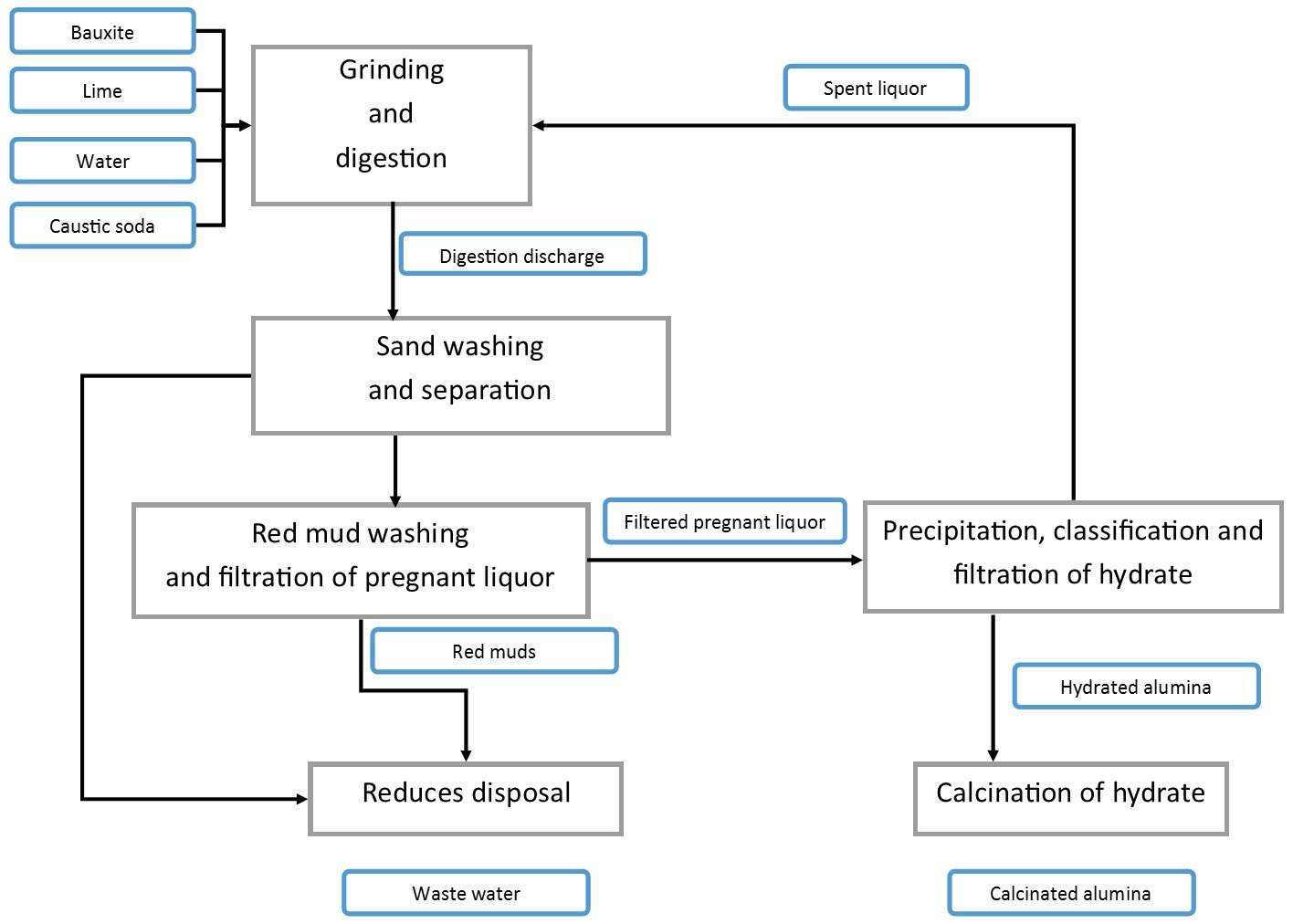
Bauxite residue is the insoluble solid waste generated during the processing of bauxite into alumina via the Bayer Process. It is separated from the pregnant sodium aluminate liquor during the clarification stage and represents the fraction of bauxite that cannot be dissolved in caustic soda.​

Figure 1 — The Bayer process

Composition

Red mud is a heterogeneous mixture of oxide compounds and residual minerals from the parent bauxite that were not solubilised during digestion:

Component Notes
Iron oxides (Fe₂O₃, FeO(OH)) Dominant component; responsible for the characteristic red colour; up to 60% by mass
Silica (SiO₂) Residual reactive and non-reactive silica
Titanium dioxide (TiO₂) Present in most bauxites
Aluminium oxide/hydroxides Unextracted residual aluminium
Sodium hydroxide (NaOH) Residual caustic soda from digestion liquor
Calcium compounds From lime additions during digestion
Trace heavy metals Pb, Cr, As, V, and others; potential environmental concern


Key Physical & Chemical Characteristics

Property Value
Physical state Slurry at 10–30% solids concentration
Colour Red to reddish-brown
pH 10–13 (highly alkaline)
Density Variable; ~1.5–2.0 g/cm³ (dried)


Generation Rate

For every tonne of alumina produced, approximately 1.0–1.5 tonnes of red mud are generated, with a global average of 1.23 tonnes. Given that global alumina production exceeds 130 million tonnes per year, red mud generation represents one of the largest industrial waste streams in the world.

Environmental Concerns

Red mud's high alkalinity (pH 10–13) and content of trace heavy metals make it a significant environmental hazard:

  • Long-term storage in large tailings ponds risks alkaline leachate contamination of soil and groundwater
  • Pond failures can cause catastrophic spills — the most notable being the Ajka disaster in Hungary (2010), when a dam breach released approximately 1 million m³ of red mud
  • The US EPA classifies bauxite refinery residuals as TENORM (Technologically Enhanced Naturally Occurring Radioactive Material) due to concentration of naturally occurring radioactive elements during refining​

Valorisation & Reuse

Significant research effort is directed at converting red mud from a waste into a resource:​

  • Iron and steel production — recovery of iron from the iron oxide fraction
  • Rare earth element recovery — red mud contains elevated concentrations of scandium and other REEs
  • Cement and construction materials — as a supplementary cementitious material or in road base applications
  • Geopolymers — as an alkali-activated binder material
  • Soil amendment — neutralised red mud used to remediate acid sulfate soils


References

  1. Wikipedia. Red mud (Page version Feb 23, 2026)
  2. Everything.Explained.Today. Red mud explained (Accessed Feb 26, 2026)
  3. RedMud.org. Red Mud Project (Accessed Feb 26, 2026)
  4. Bian J, Li S, Zhang Q. (Sep 21, 2022). Experimental Investigation on Red Mud from the Bayer Process for Cemented Paste Backfill. Int J Environ Res Public Health. 19(19):11926. DOI: 10.3390/ijerph191911926. PMID: 36231225; PMCID: PMC9565261
  5. Patel, S., & Pal, B.K. (Aug 2015). Current status of an industrial waste: Red mud an overviewIJLTEMAS, 4(8), 1-16
  6. FluidFlow. The Bayer Process: Fluid Flow in Alumina Plants (Mar 15, 2022)
  7. U.S. Environmental Protection Agency (EPA). TENORM: Bauxite and Alumina Production Wastes (Apr 22, 2015)
  8.  Industry-University Cooperative Research Centers Program (IUCRC), The National Science Foundation (NSF). Catalyzing Commercialization: An Economically Viable Process to Recover High-Value Products from Red Mud (Jun 17, 2020)

Insight Articles
Your insights will be shown here

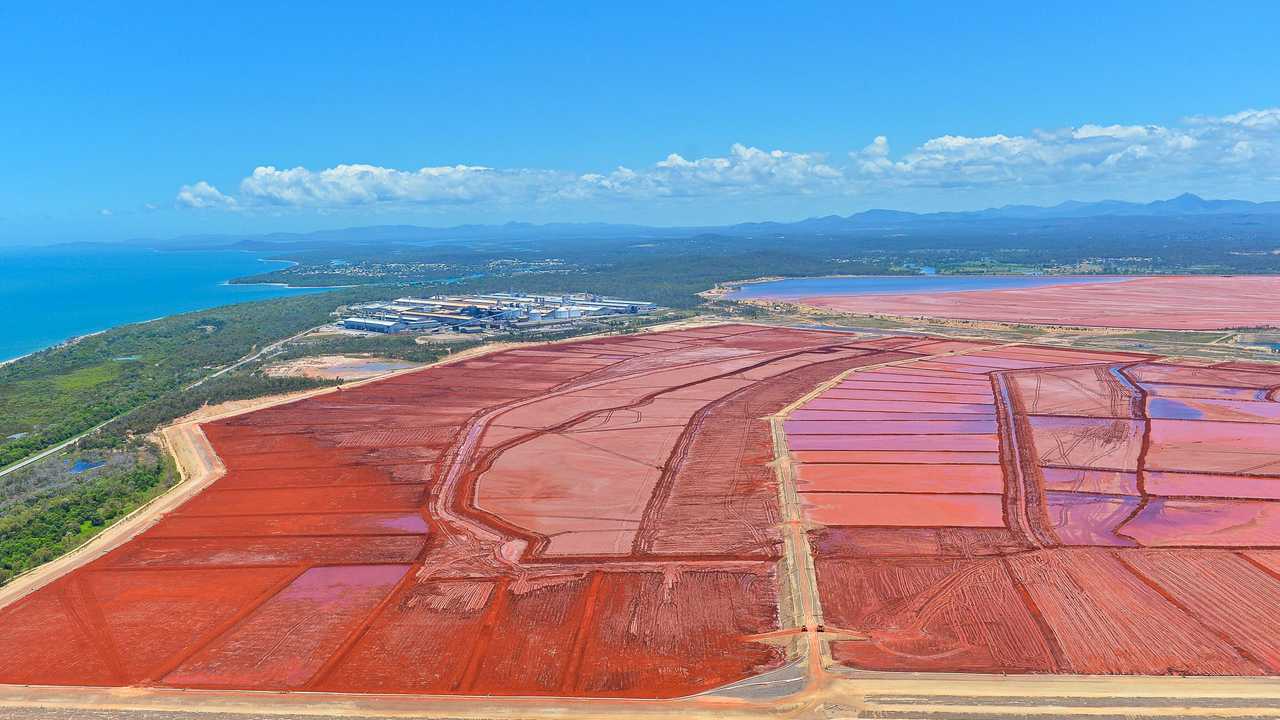
Queensland Alumina Limited's red mud dam https://content.api.news/v3/images/bin/8d767511115cf08c56d32a18961ad291
Identifiers

No Identifiers defined

Chemical Data

Specific Gravity
1.75
Crude Data

API Gravity
-50.64
Country
Product Settings

Default
Status
A
Content provided by
Transaction Name Date
Modified by UserPic   Kokel, Nicolas 2/26/2026 3:03 PM
Added by UserPic   Kokel, Nicolas 2/26/2026 1:38 PM