
Product
Metallurgical Coke
Names
Coke (coal); Metcoke; Catalytic Coke; Low Ash Metallurgical Coke; LAM Coke; MET Coke
Insight Articles
#PS243
Main Product
Coke
Segment
Refined Products
Main-Family
Refinery Residues
Sub-Family
Coal & Petroleum Residues
Physical State

Solid

Description

Metallurgical coke is a solid, porous, high-carbon material produced by the destructive distillation (carbonization) of low-ash, low-sulphur bituminous coal (coking coal) at temperatures of 900–1,100°C in the absence of air. During carbonization, volatile matter is driven off, leaving behind a fused, cellular carbon structure with high mechanical strength and thermal stability. The residue obtained from carbonizing non-coking coals such as sub-bituminous coallignite (brown coal), or anthracite is distinct and is referred to as char.

Coke's principal constituent is carbon, with minor amounts of mineral matter (ash) and residual volatile matter. Its key functional properties — high compressive strength, low reactivity, and high porosity — make it uniquely suited for use as a fuel, reductant, and structural support medium in the blast furnace. In iron and steel making, coke serves three simultaneous roles: it provides the thermal energy required for smelting, it generates carbon monoxide (CO) as the primary reducing agent for iron ore, and it physically supports the burden of iron ore and limestone in the blast furnace shaft. Since coke is a fundamental raw material in the production of pig iron — which is in turn the primary input for steel manufacturing — integrated steel plants typically operate their own Low Ash Metallurgical (LAM) coke plants on-site to secure supply and quality control.

Grades

Metallurgical coke is produced in several grades according to end-use requirements:

  • Blast Furnace Coke — the largest-volume grade; requires high mechanical strength (CSR >60%), low reactivity (CRI <25%), low ash (<10%), and low sulphur (<0.7%) to support efficient blast furnace operation
  • Foundry Coke — larger lump size, higher carbon content, and lower sulphur than blast furnace coke; used in cupola furnaces for iron casting
  • Ferro-Alloy Coke — used as a reductant in the production of ferro-alloys (ferro-manganese, ferro-silicon, ferro-chrome); typically requires very low ash and specific reactivity characteristics
  • Other Chemical/Industrial Grades — used in calcium carbide production, phosphorus smelting, and other electrochemical reduction processes

Chemical & Physical Data

Field Value Notes
Molecular Weight Not defined (0) Complex carbonaceous mixture ​
Chemical Formula C Principal constituent carbon ​
Specific Gravity (true) 1.90–2.10 g/cm³ Per ASTM D167 
Apparent density 0.85–1.05 g/cm³ Influenced by porosity ​
Bulk density ~0.78–0.95 g/cm³  
Melting point Not applicable Solid carbonaceous material
Boiling point Not applicable Combusts/decomposes
Freezing point Not applicable  
Sulfur content 0.4–0.8 wt% Crude-/coal-dependent ​
Fixed carbon 86–92 wt%
Ash content 8–12 wt%
Volatile matter <1.5 wt%
Dielectric constant 1.5 (ambient)


Key Quality Parameters

Parameter Typical Specification
Fixed carbon 86–92 wt%
Ash content 8–12 wt% (LAM: <10%)
Sulphur 0.4–0.8 wt%
Volatile matter <1.5 wt%
Moisture <5 wt%
CRI (Coke Reactivity Index) <25%
CSR (Coke Strength after Reaction) >60%
Size 25–80 mm (blast furnace)


References

  1. 2.imimg.com. Low ash metallurgical coke (Document date Feb 4, 2012)
  2. Techniques de l'Ingénieur (Sep 10, 2016). Metallurgical Coke: Properties and Consequences for the Blast Furnace
  3. 4.imimg.com. The Metallurgical Coke for Blast Furnaces for Making Iron (Document date: Jun 13, 2016)​
  4. ChemWhat. Coke (coal) CAS#: 65996-77-2; ChemWhat Code: 950830 (Accessed Mar 3, 2026)​
  5. Chemical Book. 65996-77-2 (Accessed Mar 3, 2026)​
  6. Satyendra, Ispat Guru (Apr 13, 2013). Metallurgical Coke (Accessed Mar 3, 2026)​
  7. Haapakangas J. (2016). Coke Properties in Simulated Blast Furnace Conditions. University of Oulu
  8. Niu W., Li Y., Li Q., Wang J., Wang G., Zuo H., She X., & Xue Q. (Jun 15, 2024). Physical and chemical properties of metallurgical coke and its evolution in the blast furnace ironmaking processFuel, 366, 131277. DOI: 10.1016/j.fuel.2024.131277​​
  9. Kumar D., Saxena V.K., Tiwari H.P., Nandi B.K., Verma A., & Tiwary, V.K. (Jan 6, 2022). Variability in metallurgical coke reactivity index (CRI) and coke strength after reaction (CSR): An experimental studyACS Omega, 7(2), 1703–1711. DOI: 10.1021/acsomega.1c04270
  10. ​Fernández-González D., Gómez-Rodríguez C., & Verdeja L.F. Coke reactivity index (cri) and coke strength after reaction (csr) correlation: application to cokes for ferroalloys industry In Production of engineering materials, pp. 30–47 (Document date: Sep 22, 2022) 
  11. ScienceDirect. Coke Rate (Accessed Mar 3, 2026)​
  12. Richa Refractories. Metallurgical Coke (Accessed Mar 3, 2026)
  13. Metsil. Low Ash Metallurgical Coke (Accessed Mar 3, 2026)
  14. Carfer. Metallurgical Coke (Accessed Mar 3, 2026)​

Insight Articles
Your insights will be shown here

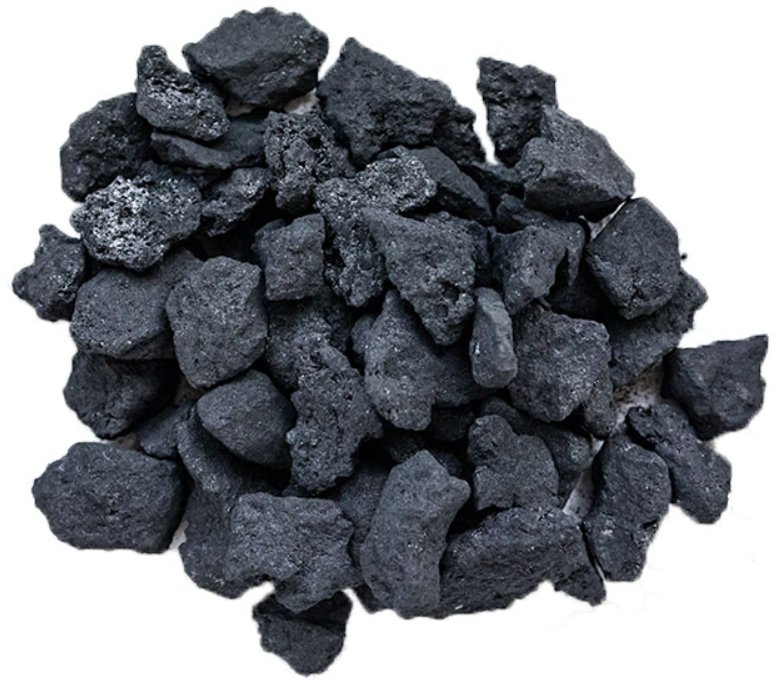
Metallurgical coke | Source: Ming Shan http://www.metallurgycoke.com/1-1-metallurgical-coke.html
Identifiers

logo CAS Number
65996-77-2
logo EC Number
266-010-4
logo ECHA InfoCard
100.059.991
Chemical Data

Chemical Formula

Coke (coal)

Sulfur Content (wt%)
0.6
Specific Gravity
2.00
Crude Data

API Gravity
-60.75
Country
Product Settings

Default
Status
A
Content provided by
Transaction Name Date
Modified by UserPic   Kokel, Nicolas 3/3/2026 5:00 PM
Added by UserPic   Kokel, Nicolas 11/9/2021 11:11 AM