
Product
Poly(Methyl Methacrylate)
Abbreviation
PMMA
Names
Poly(Methyl 2-Methylpropenoate); 2-Propenoic acid, 2-methyl-, methyl ester, homopolymer; Acrylic Glass; Plexiglass
Insight Articles
#PS100
mma pmma acrylicglass plexiglass acrylicglass
Main Product
Poly(Methyl Methacrylate)
Segment
Chemicals
Main-Family
Polymers
Sub-Family
Other PO & non-PO (Co)polymers
Physical State

Solid

Description

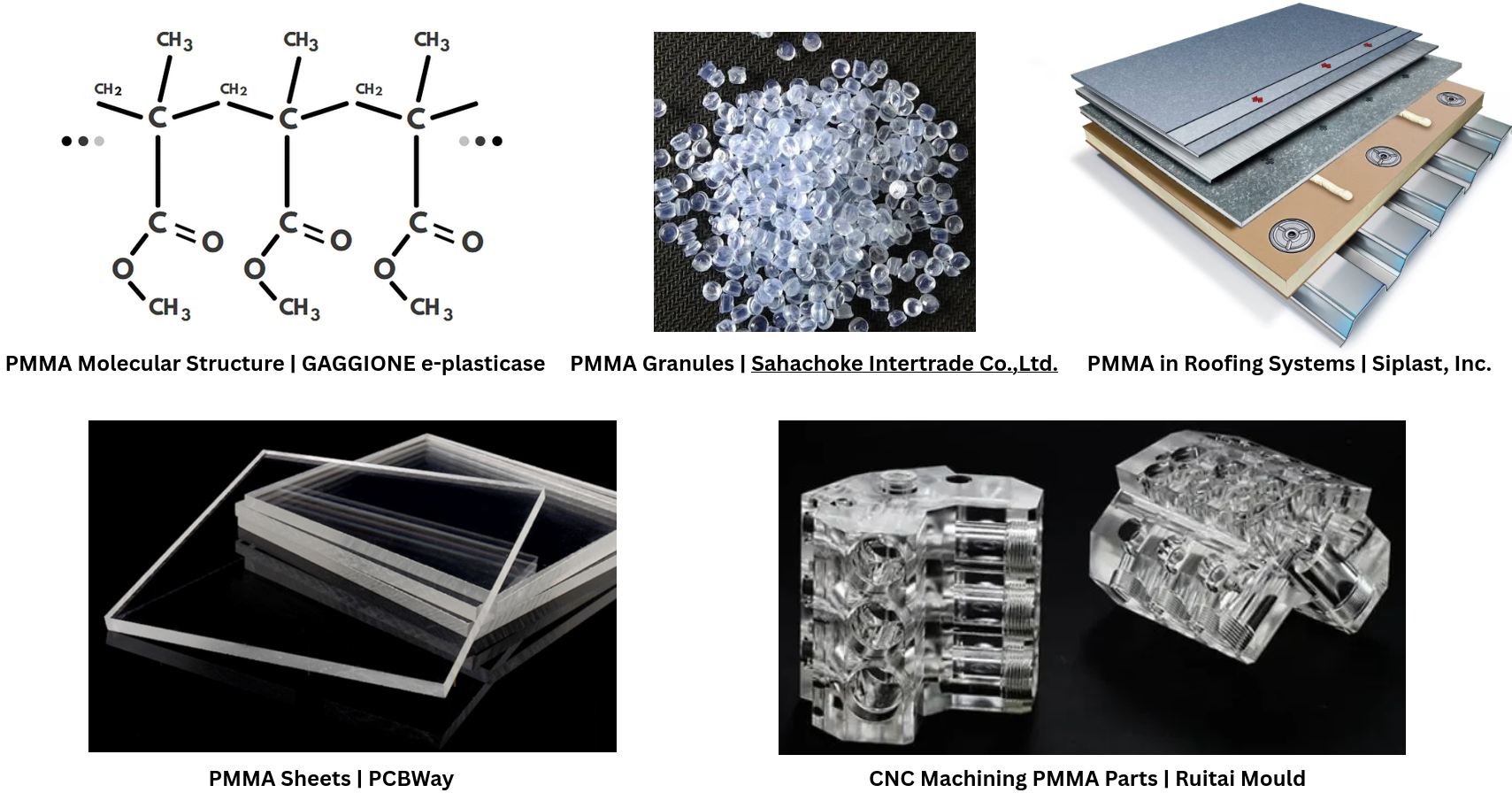
Poly(Methyl Methacrylate) (PMMA), also known as Acrylic, Acrylic Glass, or Plexiglass, as well as by the trade names Crylux, Plexiglas, Acrylite, Astariglas, Lucite, Perclax, and Perspex among several others, is a transparent thermoplastic often used in sheet form as a lightweight or shatter-resistant alternative to glass. It can also be used as a casting resin, in inks and coatings, and for many other purposes.

PMMA is produced by polymerization of methyl methacrylate (MMA): PMMA resin via the mass (bulk) process — soluble initiator, heating, pelletizing — or the suspension process, in which MMA is dispersed in water and the beads are recovered by centrifugation and drying; PMMA cast sheets are made by bulk polymerization of liquid monomer cast between sealed glass plates. Product forms comprise resin, cast sheet and extruded sheet, with grades spanning standard, impact-modified (e.g. the PLEXIGLAS® Resist family), heat-resistant and special grades.

PMMA is an amorphous "organic glass": it has no melting point, solid below its glass-transition temperature, which is approximately 105 °C for atactic PMMA and 85–165 °C across commercial grades depending on copolymer composition (PLEXIGLAS Resist zk6BR: Tg 109 °C, ISO 11357). PMMA density values are 1.18 g/cm3 (general) and 1.16 g/cm3 for an impact-modified molding grade (ISO 1183), giving a band of approximately 1.16–1.20 g/cm3 at 23 °C. Molecular weight is a grade-dependent distribution (e.g. Sigma-Aldrich research grade at Mw 120,000 by GPC).

PMMA offers high weather resistance and excellent light transmission, with a refractive index of 1.4905 at 589.3 nm — a genuinely optical polymer. Applications include luminaire covers, hollow profiles, writing utensils, appliance housings, coextruded window-frame profiles, gutters, downspouts and housewares, plus medical uses such as tooth implants, bone cements and hard contact lenses.

Sources: 


Insight Articles
Insights from our Experts

UserPic
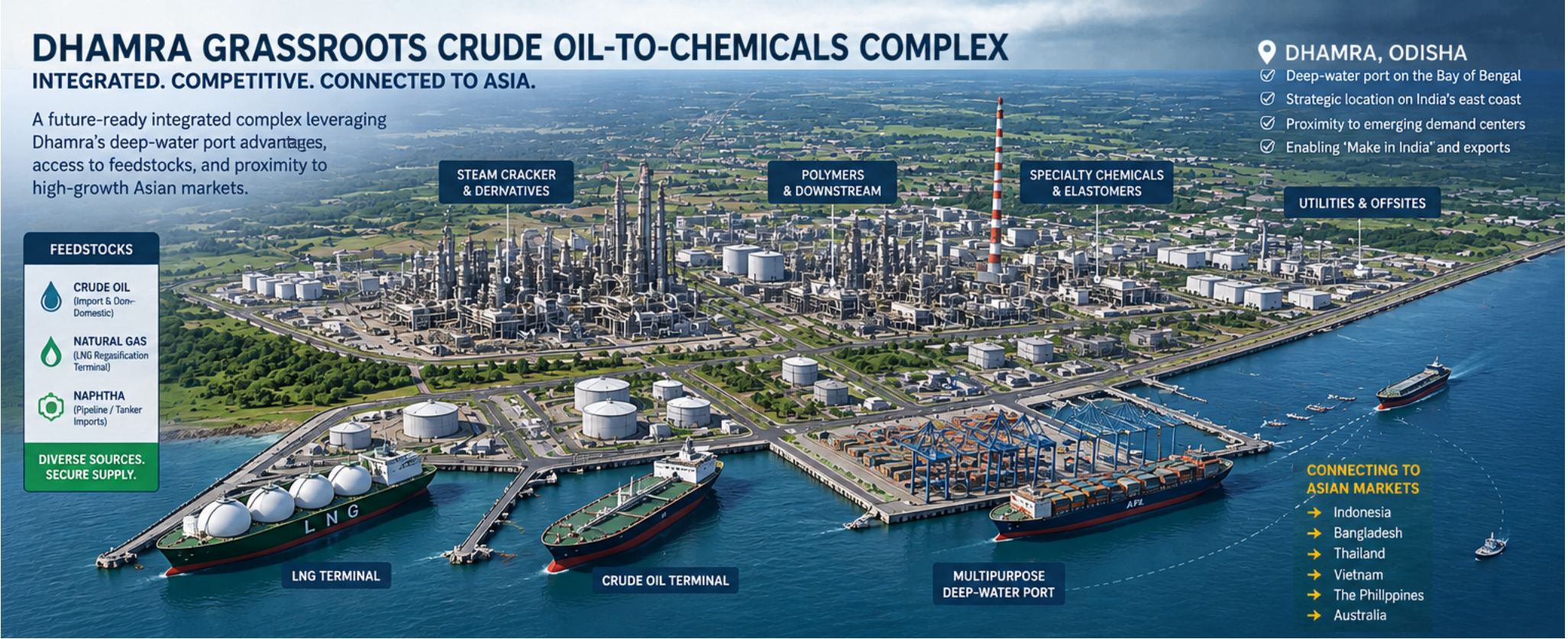
Setting up a Grassroots Complex Maximizing Advanced Petrochemicals in Eastern India Dhamra- Part II
Gupta, Sanjay • 11/16/2026 4:08:38 PM

This is part II of this article series, in which we provide a brief insight on the processes and technologies associated with niche products for the grassroots Integrated petrochemical complex in Eastern India.

The first part previously covers the background and perspective of a location where this complex can...
Click here for full content
Identifiers

logo CAS Number
9011-14-7
logo EC Number
618-466-4
logo ECHA InfoCard
100.112.313
logo IUPAC Name
Poly(Methyl 2-Methylpropenoate)
Chemical Data

Chemical Formula

(C5O2H8)n

Sulfur Content (wt%)
0
Specific Gravity
1.18
Crude Data

API Gravity
-11.58
Country
Product Settings

Default
Status
A
Content provided by
Transaction Name Date
Modified by UserPic   Kokel, Nicolas 11/17/2026 9:02 AM
Added by UserPic   Kokel, Nicolas 3/20/2021 5:09 PM