Product
Ammonia
Segment
Refined Products
Main-Family
Refinery Gases
Sub-Family
Gaseous nitrogen compounds
Link
Insight Articles
#PS302

Description

Ammonia is an inorganic chemical compound of nitrogen and hydrogen with the molecular formula NH₃. As the simplest and most stable nitrogen hydride, it is a colourless, toxic gas with a distinctively pungent odour, highly soluble in water to form ammonium hydroxide (aqueous ammonia).


Physical & Chemical Properties

Ammonia is one of the most abundant nitrogen-containing compounds in the atmosphere and occurs naturally through the anaerobic decay of plant and animal matter. Biologically, it is a common nitrogenous waste — particularly among aquatic organisms — and plays a key role in the nitrogen cycle. It can absorb substantial amounts of heat from its surroundings (approximately 327 calories per gram), which underpins its utility as a refrigerant.


Production

Industrial-scale production relies almost exclusively on the Haber–Bosch Process: a gas-phase catalytic reaction between Hydrogen (H₂) and Nitrogen (N₂) at approximately 450 °C and 100 atm (10 MPa) pressure. Just over 70% of ammonia is produced via steam methane reforming (SMR), with the remaining share derived from coal gasification. An emerging pathway — green ammonia — replaces fossil-derived hydrogen with green hydrogen from water electrolysis powered by renewable energy, combined with atmospheric nitrogen via the same Haber–Bosch synthesis.


Key Derivatives & Applications

Ammonia serves as a foundational building block across several industrial sectors:

  • Fertilizers (>70% of global use): Converted into urea, diammonium phosphate (DAP), monoammonium phosphate (MAP), ammonium nitrate, and ammonium sulphate — collectively serving as precursors to approximately 45% of the world's food supply

  • Nitric acid: Produced via the Ostwald Process by catalytic oxidation of ammonia over platinum at 700–850 °C and ~9 atm; nitric acid is in turn used to manufacture fertilisers, explosives, and organonitrogen compounds

  • Refrigeration (R-717): Used as an industrial refrigerant owing to its superior thermodynamic properties and low cost; widely applied in cold storage, food processing, and ice rinks

  • Pharmaceuticals: Used as a respiratory stimulant, neutralising agent, and for antibacterial properties; ammonium hydroxide is a key ingredient in pharmaceutical-grade formulations

  • Cleaning & industrial degreasers: Found in glass cleaners, floor cleaners, heavy-duty degreasers, and hospital-grade disinfectants

  • Plastics, fibres & other chemicals: Used in the manufacture of rayon, urea resins, plastics, dyes, pesticides, and — combined with benzene — in the production of aniline and downstream isocyanates such as MDI

  • Metallurgy: Applied in nitriding of alloy steels to harden surfaces, and as a convenient portable source of atomic hydrogen for welding

  • Water treatment: Used as a stabiliser, neutraliser, and nitrogen source in municipal water purification and wastewater treatment


Collection & Handling

In laboratory settings, ammonia gas is collected by upward displacement of air (being lighter than air) and cannot be collected over water due to its high solubility. Industrially, it is handled and transported as a liquefied gas under pressure. Its toxicity and corrosive nature require specialised corrosion-resistant equipment, which limits domestic-scale applications


Insight Articles
Your insights will be shown here

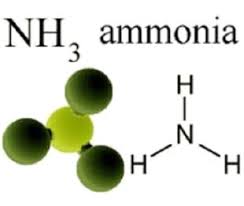
Ammonia molecular structure | Source: Catalytic Products International https://www.cpilink.com/blog/are-ammonia-emissions-important
Settings

Status
A
Unit of Measure
Metric tonne (1,000 kg)
Physical State

Gas

Building Block / Value Chain Info

Value Chain-I
Hydrogen
Value Chain-II
Nitrogen
Content provided by
Transaction Name Date
Modified by UserPic  Kokel, Nicolas 4/19/2026 4:21 AM
Added 2/19/2022 2:54 PM
Map of Ammonia Products producing locations in ppPLUS

ppPLUS Insights: Please register to view the Map!
Production Analysis