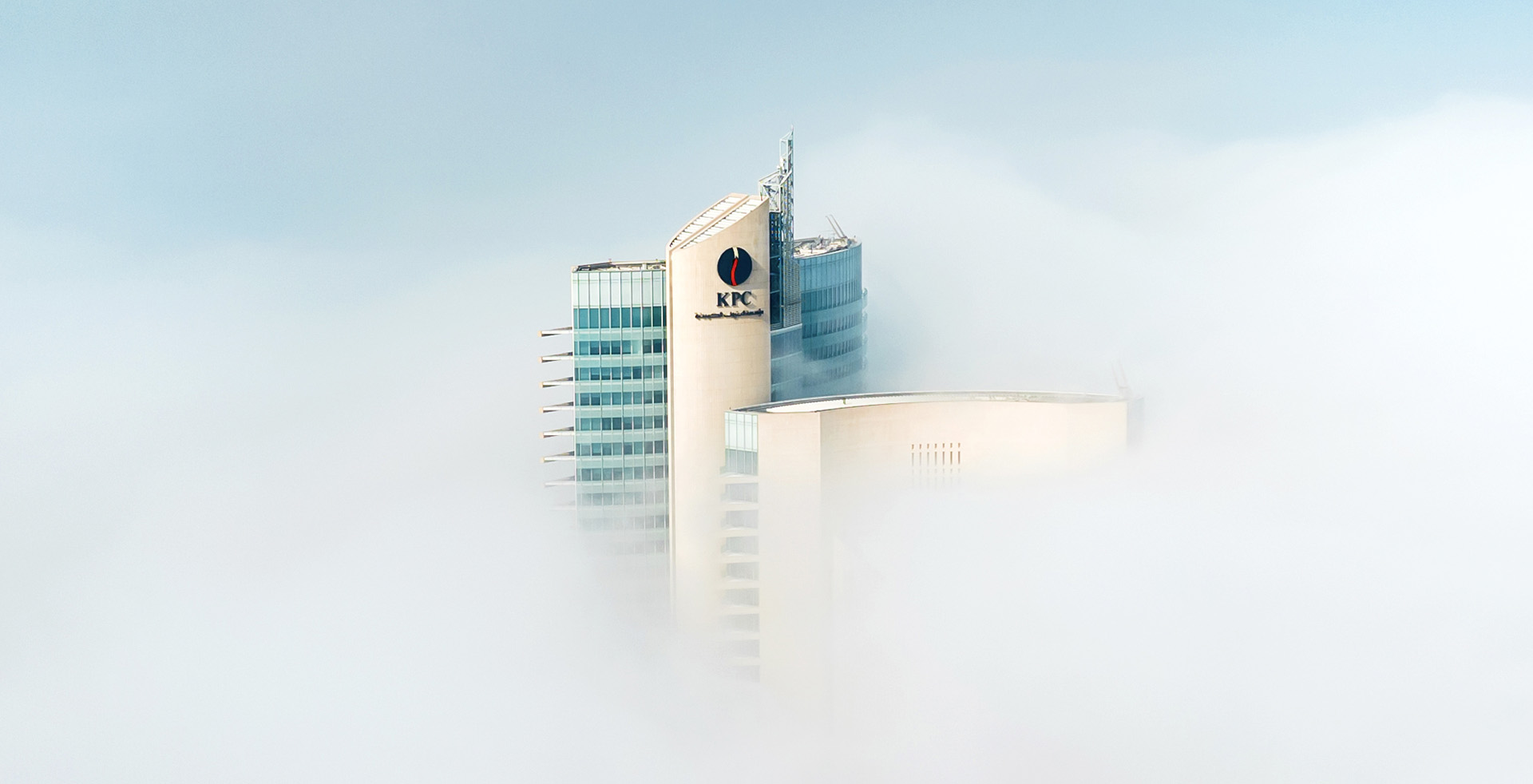
KPC Headquarter | Source: KPC website
Kuwait Petroleum Corporation (KPC) is Kuwait's fully state-owned national oil company, headquartered in Shuwaikh, Kuwait City. Founded on 27 January 1980 by Amiri Decree, KPC was established as an umbrella holding company to consolidate all nationally owned companies operating in oil production, processing, and transportation under a single entity. It is one of the world's largest oil companies, managing Kuwait's hydrocarbon interests domestically and internationally — Kuwait holds approximately 8.27% of global proven oil reserves, ranking it among the top five reserve holders globally.
History
KPC's origins trace back to 1934 when the first Kuwait Oil Concession Agreement was granted to a joint venture of Gulf Oil Corporation and the Anglo-Persian Oil Company. By 1975, the Kuwaiti state progressively acquired shares in the company through agreements with BP and Gulf, culminating in KPC's formal establishment in January 1980 as an integrated national energy holding company. Between 1983 and 1987, KPC pursued aggressive international expansion, acquiring Gulf Oil's refining operations across Western Europe and BP's Danish assets, and launching its well-known Q8 retail brand in 1986. Further European expansion followed with operations in Spain (1992) and acquisition of BP's Luxembourg assets (1994).
Business Activities
KPC operates across the full hydrocarbon value chain through its subsidiaries:
- Upstream – exploration, drilling, and production of oil and gas in Kuwait and internationally
- Downstream – refining, gas processing, and local/international marketing of petroleum products
- Petrochemicals – production and marketing of petrochemical products and fertilizers
- Midstream – marine transportation of crude oil and petroleum products
- LNG – import and regasification of liquefied natural gas via the Al-Zour complex
Subsidiaries ("K Companies")
KPC manages an integrated supply chain through eight wholly owned subsidiaries:
Production & Refining Capacity
Kuwait holds approximately 8.27% of global proven oil reserves (~101.5 billion barrels), ranking it among the world's top five reserve-holding nations. As of September 2025, KPC's domestic production capacity reached 3.2 million bpd — the highest level in over a decade — though actual output remains constrained at approximately 2.6 million bpd due to OPEC+ quota commitments. As of March 2026, KPC has stated it remains fully prepared to restore production levels once conditions allow.
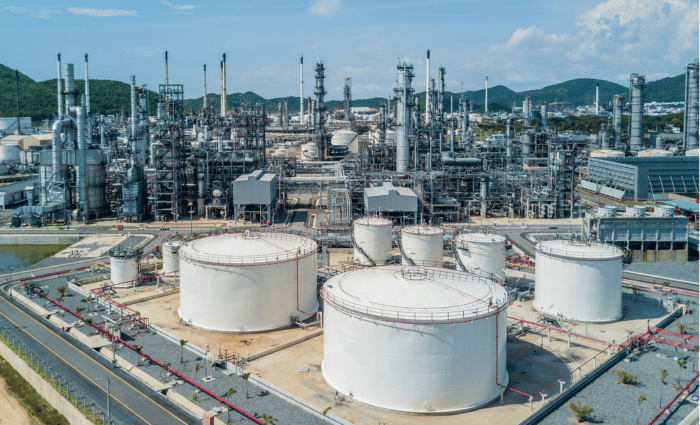
On the downstream side, Kuwait's total domestic refining capacity stands at approximately 1.4 million bpd following the commissioning of the Al-Zour refinery (operated by KIPIC) in 2024 — one of the largest single-train refineries in the world. KNPC's two legacy refineries, Mina Abdullah and Mina Al-Ahmadi, account for 690,000 bpd of that total, complemented by gas liquefaction facilities of 2.5 billion SCFPD.
Strategy 2040
KPC's long-term strategy targets production capacity of 4 million bpd by 2035 and sustaining that level through 2040 — representing a roughly 33% increase from current levels. The five key growth axes include: increasing upstream production, expanding offshore exploration (including the Durra gas field with ~200 billion m³ of recoverable gas reserves), expanding domestic refinery capacity, growing petrochemical output to 14.5 million tonnes/year, and reducing the carbon footprint toward a net-zero ambition. KPC also aims to raise natural gas production to 4 billion cubic feet per day by 2030.
Recent Developments
In January 2020, KPC signed a 15-year LNG supply agreement with QatarEnergy for up to 3 million tonnes per annum, with deliveries commencing from 2022.
In April 2025, KPC formally announced the merger of KNPC with KIPIC as part of a broader restructuring program approved by the Kuwait Cabinet and the Supreme Petroleum Council. A parallel merger of Kuwait Oil Company (KOC) with Kuwait Gulf Oil Company (KGOC) is also under consideration, aiming to consolidate operations, cut costs, and boost efficiency.