The Propane–Propylene Superfractionator separates propylene from propane at high purity
- Technology
- Generic Propane–Propylene Superfractionator

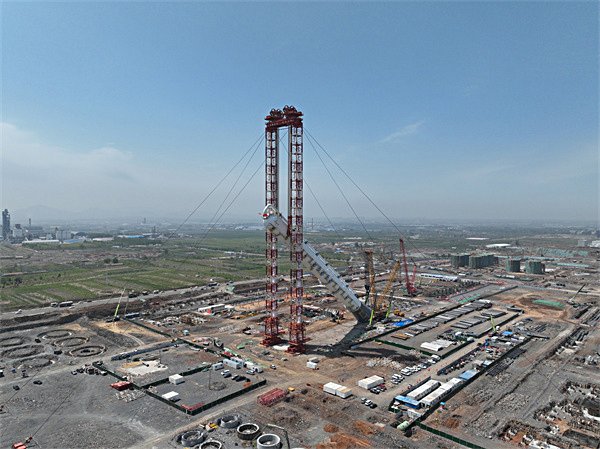
World's longest (138.6 meter) propane-propylene separation tower hoisted at the Penglai-Yantai Wanhua Industrial Park | Source: SASAC (June 8, 2023)
The propane–propylene splitter (P–P splitter, or "C3 splitter") is one of the most demanding distillation duties in the hydrocarbon industry, and a core asset wherever propylene must be separated from propane at high purity. It appears in two principal industrial contexts:
- FCC-based refineries — as the centerpiece of the Propylene Recovery Unit (PRU), recovering olefinic propylene co-produced with propane in the fluid catalytic cracker's off-gas and LPG streams.
- On-purpose propane dehydrogenation (PDH) units — where fresh and recycled propane is catalytically dehydrogenated to propylene, and the splitter closes the loop by separating converted propylene from unconverted propane, which is recycled to extinction.
In FCC service, off-gas and LPG contain substantial propylene — typically 4–8 wt% of fresh feed, and up to 15–20% in petrochemical-mode (PFCC) operation. In PDH service, the splitter processes the full reactor effluent C3 stream, where per-pass propane conversion is only 35–50% (equilibrium-limited, dehydrogenation being endothermic and reversible), so the splitter must handle a much higher recycle propane load relative to propylene product than in FCC service. In both cases, recovering propylene at polymer-grade (99.5–99.9 mol%) or chemical-grade (92–96 mol%) purity requires separating it from propane — two components with a relative volatility of only ~1.08–1.2, one of the most difficult close-boiling separations in the hydrocarbon industry. This demands superfractionation: very tall columns with exceptionally high tray counts, high reflux ratios, and — for energy optimization — heat pump integration.
Continue reading this technology profile here.
#superfractionator #heatpumpsystem #propanepropyleneseparation #fccrefinery #propanedehydrogenation #pdh