🎬 VIDEO — The DREAM Refinery Project in India with Guest Sanjay Gupta

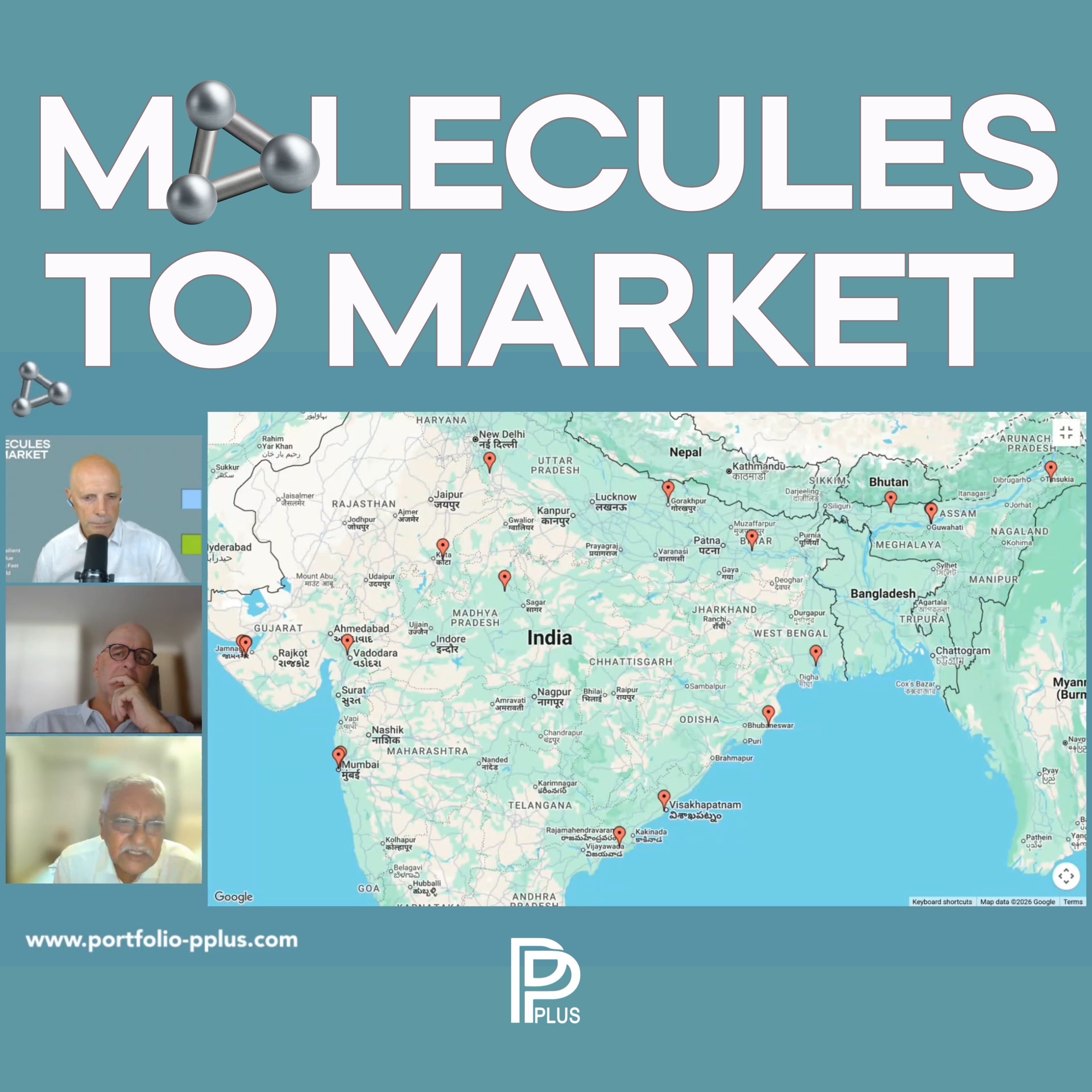
The DREAM Refinery — Part 1: The Foundation
Part 1 lays the strategic foundation. Sanjay explains why India continues to add refining capacity, why new installations are shifting from the west coast to the east coast, and why tomorrow’s “refineries” will actually be integrated mega petrochemical complexes in disguise. He walks through the design basis and objective function: a crude throughput of around 20 million tonnes — the sweet spot for a single crude column — feeding a world-scale steam cracker of 1.7–2 million tonnes of ethylene, an aromatics complex of 1.2–1.5 million tonnes, and a product slate that still delivers LPG and diesel while capping gasoline.
📌 CHAPTERS
-
0:00 – Introduction & Welcome: Why India Needs Another Refinery
-
1:12 – From Fuels to Petrochemicals: The Changing Dynamics
-
3:26 – Moving Refineries to India’s Eastern Coast
-
7:26 – The Scale of New Refineries
-
8:11 – Setting the Design Basis & Objective Function
-
10:00 – Phasing Out LPG: Solar Cooking & Piped Gas
-
12:52 – World-Scale Petrochemicals & Feedstock Selection
-
15:21 – Sizing the Complex: Olefins & Aromatics
-
18:12 – The 20-Million-Tonne Complex & Crude Flexibility
-
23:30 – Product Objectives: LPG, Gasoline, Diesel & Kerosene
-
25:44 – The Gasoline (MS) Block & Naphtha Routing
-
30:41 – Power Interruption & Wrap-Up (Continued in Part 2)
The DREAM Refinery — Part 2: Identity and General Engineering
Picking up right where the power cut left us in Part 1! In this episode, Sanjay Gupta gives our model refinery project an identity: welcome to the "Dream Refinery", to be located on India's east coast, in the Tamil Nadu / Chennai region. Sanjay explains the strategic logic behind going east: energy security, Bay of Bengal offshore exploration, and the export opportunity toward Southeast Asia, Australia, Japan and Korea.
Then the episode gets deep into the engineering: the full secondary and tertiary processing scheme designed to maximize petrochemicals. From the vacuum column split to VGO hydrotreating, the high-severity petro FCC targeting 20%+ propylene, and a multi-feed olefin complex recovering ethylene even from FCC off-gases — Sanjay walks through a configuration where gasoline becomes almost an incidental product. Bottom-of-the-barrel is handled by a delayed coker and slurry hydrocracker combination, with the C4 mix potentially converted via KBR's K-COT technology.
💡 Highlights in this episode:
⚓ Offshore infrastructure: crude SPMs 20–30 km offshore for VLCCs, product SPMs and jetties
⚗️ Why a petro FCC + VGO hydrotreater + olefin complex trio forms the heart of the secondary processing
🧬 Cracker design decisions: P/E ratio of 0.42–0.50, recovering 100 KTA of ethylene from off-gases
♻️ Sulphuric acid instead of elemental sulphur — a byproduct with positive IRR
☢️ SMR nuclear power plants as a future steam and power source for the complex
💰 Why fossil-fuel power generation at ₹10–12/kWh destroys project IRR vs. grid power at ₹4 — and the Indian capex advantage: ±10% cost estimates that never failed
📌 CHAPTERS
-
0:00 – Resuming After the Interruption: Naming & Locating the Project
-
2:14 – Why Move East: Strategy, Security & Exploration
-
4:33 – The Southeast Asia–Pacific Opportunity
-
6:03 – Choosing a Location: Tamil Nadu / Chennai — The "Dream Refinery"
-
7:33 – Offshore Infrastructure: SPMs & Jetties
-
9:12 – Recap of the MS Block & Naphtha Routing
-
10:33 – Hydrogen Sources: SMR vs. Green Hydrogen Configurations
-
14:33 – Coal & Petcoke Gasification: Chemicals, Not Hydrogen
-
16:49 – The CCR & Aromatics Orientation of the MS Block
-
17:42 – Secondary Processing: The Vacuum Column & RCO Split
-
21:27 – VGO Hydrotreating & High-Severity Petro FCC
-
26:01 – The Three Secondary Blocks & Ethylene Recovery from Off-Gases
-
28:12 – Cracked Naphtha, Prime G & Aromatics Extraction for Gasoline
-
31:28 – LCO Quality & the Diesel Hydrotreater (DHDT)
-
33:24 – Designing the Olefin Complex & the P/E Ratio
-
39:02 – The Cracker's C4 Mix: Superflex/KBR, Alkylation & Recycle
-
44:28 – Cracker Bottoms & Back-End Integration into Aromatics
-
47:36 – Identifying K-COT as a C4s Cracking Technology
-
50:10 – Tertiary Processing: Vacuum Residue & Coker Feedstocks
-
54:13 – The Bottoms Configuration: Coker & Slurry Hydrocracker Yields
-
58:20 – Coker Distillates, LPG & Off-Gas Ethane Recovery
-
1:00:30 – Sulphur as Sulphuric Acid
-
1:02:06 – Auxiliary Units: The Hydrogen Balance
-
1:03:52 – Steam & Power: The Case Against Fossil-Fuel Generation
-
1:08:23 – Grid, Renewables & the Economics of Power
-
1:11:32 – SMR Nuclear Power for Steam & Power
-
1:14:23 – Summing Up the Configuration & Downstream Units
-
1:17:07 – Rationalizing Diesel in the DHDT
-
1:18:38 – Downstream Product Chains: Phenol, Acrylates, Polymers
-
1:20:06 – Offsites & Utilities: Desalination, Air Separation & BOO Models
-
1:23:03 – Next Steps: The Sketch, Cost Estimation & Implementation Plan
-
1:25:40 – Scenarios, Collaboration & Proprietary Knowledge
-
1:30:06 – On Cost Estimation: The Indian Advantage
-
1:34:08 – Closing Remarks
🔔 STAY TUNED! The Dream Refinery journey continues: upcoming sessions will cover the downstream product chains (polymers, MEG, VCM-PVC, phenol, acrylates), the green configuration add-ons (green hydrogen, CCS, green ammonia, SAF), the implementation plan, and Sanjay's full capex estimate. Follow the Dream Refinery project on ppPLUS — and bring your questions and challenges for the upcoming community Q&A sessions! ▶️
Molecules To Market Program
🎙️ Molecules to Market is a program by Portfolio Planning PLUS (ppPLUS), bringing together technology, economics, and real facility-level data to give industry professionals a grounded, technical view of the global energy and petrochemical landscape — beyond the headlines.
#dreamrefinery #indianrefineries #integraterefinery #hydrocarbonsector #petrochemicalproject #india #tamilnadu #indianeastcoast #indianrefinery #hydrocarboncomplex #crudetochemical #renewableenergy #refinery configuration #basedesign #collaborativeproject