Acrylic acid is made via multiple routes; the 2-step propylene oxidation dominates global capacity
- Product
- Glacial Acrylic Acid
- Message Category
-

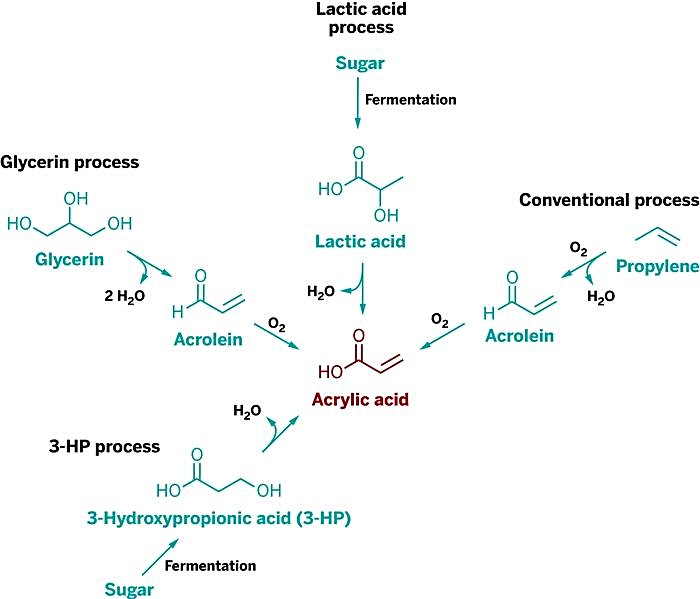
Acrylic acid manufacturing routes
Acrylic acid is the simplest unsaturated carboxylic acid and one of the most important bulk intermediates in the acrylates value chain. It is highly reactive (both at the double bond and the carboxyl group), polymerises readily, and is always shipped with an inhibitor — typically the methyl ether of hydroquinone (MEHQ) — plus dissolved oxygen to ensure safe storage and transport.
Mainstream manufacturing route is the two-step propylene oxidation, which dominates global acrylic acid capacity).
Alternative and emerging manufacturing routes include:
-
Bio-based acrylic acid from glycerol (dehydration to acrolein, then oxidation) – glycerol is a biodiesel by-product.
-
3-Hydroxypropionic acid (3-HP) fermentation from glucose, followed by dehydration – pursued for bio-acrylic acid.
-
Lactic acid dehydration – another fermentation-based route.
-
Ethylene oxide + hydrocyanic acid (acrylonitrile intermediate / ethylene cyanohydrin) route – historical, now largely obsolete.
-
Reppe chemistry (acetylene + CO + water/alcohol) – historic BASF route, phased
#acrylicacid #propyleneoxidation #acrylates #gaa #caa #taa #crudeacrylicacid #glacialacrylicacid