On purpose Propane Dehydrogenation Technology – Changing Landscape

Views expressed are personal
Introduction
Propane dehydrogenation sits in the family of paraffin dehydrogenation processes, several of which have been commercialised(1).
Propane dehydrogenation (PDH) is a key technology for on purpose route to Propylene. Traditionally, Propylene has been produced by i) Steam cracking of either Propane, NGL or Naphtha and ii) Catalytic cracking of Vacuum gas oil. These 2 routes made up > 90% of the Propylene supply. In the recent past, the surge in demand of Propylene derivatives, such as Polypropylene, Propylene oxide, Acrylonitrile, Acrylic acid, Cumene and Oxo alcohols and the shift towards lighter feedstocks to Steam Crackers in certain regions have created a gap between supply-demand of these derivatives. Therefore, on purpose Propylene production routes such as PDH have gained increasing traction to fill this gap. Emerging growth areas are mainly focused in China, APAC and in the Middle East.
In the USA, due to the abundant availability of shale gas, there has been a wave of Ethane based gas cracker plants to cater to the demand of downstream Ethylene derivative demand. The Propane coming from the shale gas is far in excess of the demand (either as fuel or in PDH) and hence it is being shipped to regions where there is demand for either its use as fuel or as feedstock to Propylene. Even in the Middle East gas fields, more Propane presents an opportunity to boost Propylene production through PDH route.
Plant capacity and process
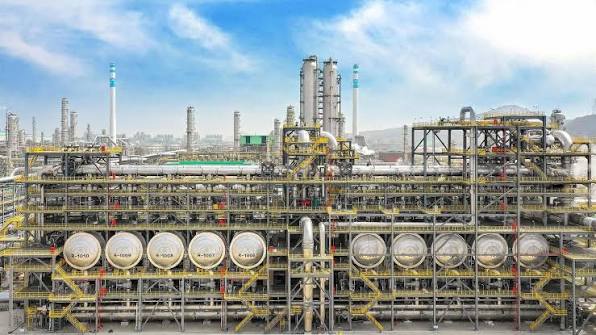
In the recent past, capacity of PDH plants has increased from 600 KTA to 750 KTA and most recently to more than 1 MMTPA. This will definitely take advantage of the economy of scale. Another interesting development is the planned integration of PDH within refinery – petrochemical integration complexes in China(2).
On the face of it, Propane dehydrogenation might look like a simple chemistry :
C3H8 -------> C3 H6 + H2 del. H = + 124 KJ/mol (1)
It is a reversible endothermic reaction favoured at high temperature and low Propane partial pressure.
But its implementation is quite tricky due to :
- Equilibrium limitations.
- Coking tendency at high temperatures
- Selectivity loss due to side products
- Catalyst life cycle
PDH reaction is a classical gas-solid catalytic reaction. The type of reactors that are normally used are :
- Fixed bed – either as downflow, up flow, radial
- Fluidized bed reactor
- Moving bed reactor
Each of the above reactor brings its own unique contacting pattern between the phases. The flow regime encountered and its intricate coupling with reaction kinetics and heat transfer characteristics play a vital role in ensuring the effectiveness of this reaction.
Several technological advancements have been made by technology licensors in areas of :
- Efficient heat transfer in the reactor to drive the reaction forward.
- Improved reactor designs and flow path
- Improved catalyst design leading to higher selectivity to Propylene
- Efficient Catalyst regeneration
- Downstream improvements
This has made PDH an extremely reliable technology.
Summary
Going forward, it is quite likely that more robust networks of piped natural gas will be made available for fuel usage in both residential and industrial sector and this would result in increased diversion of Propane from fuel / LPG usage to PDH route, thereby creating better value for Propane. Also, in the recent trend towards greater refinery-petrochemical integration especially in India, China, APAC and in the Middle East regions, it is quite possible that PDH plants might fit into this depending on the overall configuration and product slate desired.
With further demand growth expected for Propylene derivatives in the coming years, PDH technology will be an important technology for on purpose Propylene.
References :
- Bipin V. Vora, “Development of dehydrogenation catalysts and processes”, Top. Catal, Vol 55, P 1297-1308 (2012)
- Oil and Gas Journal, Sept 11 (2026) ZPC to expand Zhoushan complex with new PDH unit | Oil & Gas Journal
- Propane dehydrogenation, I.H.S. PEP 267 B (2018)