🎬 VIDEO — The DREAM Refinery Project | Part 3: Technology Selection & Project Front-End Engineering


FundingImage
Enjoying the Content?
  • Support the Expert and our Platform
  • Fuel the next Insight
  • Keeping the data free for the community

Your contribution rewards the Author and keeps our mission alive. Choose an amount and contribute via Stripe.

ppPLUS Donations Terms and Conditions apply!
 

Select Donation Amount

Site
DREAM Refinery-Petrochemical Complex Cuddalore
UserPic
Kokel, Nicolas
8/20/2026 5:06 PM

Article Image
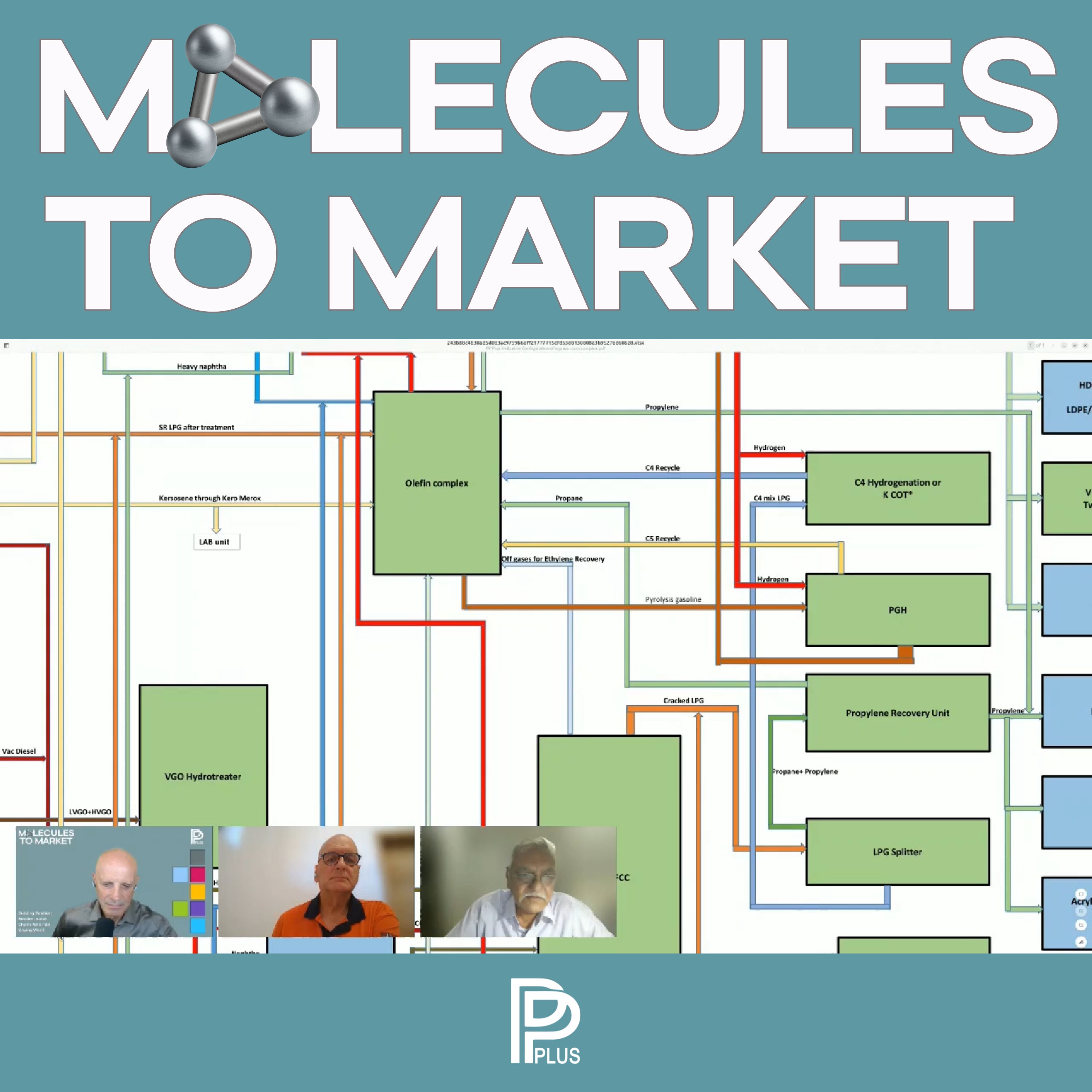
How does a mega refinery & petrochemical complex actually get approved and built in 🇮🇳 India? In Part 3 of the DREAM Refinery project, refinery expert Mr. Sanjay Gupta walks us through the entire front-end of project implementation — from feasibility reports (±30% estimates) to Detailed Feasibility Reports (±10%), licensor selection strategies, the “Managing Licensor” concept used by giants like Reliance, and the four modes of implementation (EPCM, EPC, OBE & BOO). We then go unit by unit through the complex — CDU/VDU, Petro FCC, delayed coker, olefin plant, polymers — and map each technology to its licensors. Finally, Nicolas shows how the design is being translated into a living model on ppPLUS (Portfolio Planning PLUS) — the DREAM Project is LIVE! Join the platform and contribute! 🚀


✨ HIGHLIGHTS

🔹 India’s unique path: DFR with ±10% accuracy — no FEED required!
🔹 EPCM vs EPC: why EPC can cost 22–40% more in India 💰
🔹 The Open Book Estimate (OBE) — India’s win-win implementation model
🔹 Managing Licensor concept: UOP vs Axens/Technip for the refinery basket
🔹 Why petrochemicals can NEVER be basketed — unit-by-unit technology selection is a must
🔹 Licensor landscape revealed: Indmax, Grace, Univation, Lummus, KBR, GTC, Merichem & more
🔹 The 5 critical things licensors must deliver for a flawless process package 📦
🔹 Federal vs State government: who you actually talk to in India 🏛️
🔹 Watch the DREAM complex modeled live in ppPLUS 📊


⏱️ CHAPTERS

  1. 00:00 Welcome & Introductions
  2. 01:19 Where We Are: Screening Study & Taking the Project Forward
  3. 06:40 Technology vs Site: The Two Halves of a Project
  4. 11:45 State Regulations, Incentives & Primary Logistics
  5. 14:26 The Plot Plan & Site Norms (33% Greenbelt, Zero Discharge!)
  6. 18:38 Estimating to ±30%: Plot Plan Freeze & Quantities
  7. 24:24 Modes of Implementation: EPCM, EPC, OBE & BOO
  8. 38:32 Informing the Board: Configuration, Project & Strategy
  9. 41:50 The DFR: ±10% Estimates & Licensor Selection
  10. 44:29 The Managing Licensor Concept
  11. 47:04 Two Baskets: Refinery vs Petrochemicals
  12. 51:46 Walking the Chart: CDU, VDU, CCR & Hydrotreaters
  13. 56:43 Petro FCC, Prime G & Aromatic Extraction Choices
  14. 01:02:52 The Delayed Coker: ABB Lummus vs Wood
  15. 01:04:53 Coker Peripherals: Ethane Purification & LPG Treatment (Merichem)
  16. 01:06:10 Basketing the Refinery Block
  17. 01:08:23 The Olefin Complex: No Escape From Technology Selection
  18. 01:12:24 Petrochemical Downstream Licensors (PTA, PE, PP, MEG, PVC…)
  19. 01:21:27 Alkylation, Phenol/BPA & Slurry Hydrocracking
  20. 01:25:28 Utility Blocks & BOO
  21. 01:27:14 The NIT & Basic Engineering Requirements
  22. 01:32:03 Getting Good Process Packages: Furnaces, Exchangers, Valves & Hydraulics
  23. 01:39:14 Summary of the DFR Approach
  24. 01:40:48 Translating the Design Into the ppPLUS Platform
  25. 01:44:12 Federal vs State: Who You Talk To in India
  26. 01:55:32 Joint Ventures With Foreign Companies
  27. 02:02:33 How a Foreign Promoter Could Invest: Coal-to-Chemicals
  28. 02:05:16 Closing Remarks

🎯 RESOURCES


🎙️ Molecules to Market is a program by Portfolio Planning PLUS (ppPLUS), bringing together technology, economics, and real facility-level data to give industry professionals a grounded, technical view of the global energy and petrochemical landscape — beyond the headlines.


UserPic
Gupta, Sanjay
9/9/2026 8:13 AM

Mr Nicholas


The vac Diesel from the VDU will combine with the SR diesel from ADU and will be routed to DHDT.

Typically of the RCO fed to vacuum distillation colum, 45-50% is vacumm residue, 5% vac dieel and the balance 45-50% is HVGO + LVGO. 

The combined stream of HVGO and LVGO is being referred as VGO. This can be routed to VGO HYdt for upgradtion after hydrotreatment in a low severity unit to prepare the Feed for PFCCU. 


Regards

UserPic
Kokel, Nicolas
9/6/2026 4:30 PM

Gupta, Sanjay

We have now clarified the distinction you made between vacuum diesel and vacuum gasoil by updating the corresponding product profile. For that reason, in the initial DREAM Project block flow diagram, we replace:

  • VD with LVGO
  • LVGO/IVGO (the mixed stream going first to VGO HDT then to PFCC) with IVGO/HVGO)


Typical VDU side-cut structure (top to bottom)

  1. Vacuum Diesel (VD) / Vacuum Distillate / Wash oil — the lightest side cut from the Vacuum Distillation Unit (VDU), roughly the TBP range ~350–430/450 °C (atmospheric equivalent). It’s the overlap/tail of the diesel boiling range that couldn’t be recovered in the atmospheric column.

  2. Light VGO (LVGO) — ~380/400–470 °C

  3. Medium/Intermediate VGO (MVGO / IVGO) — ~470–510 °C (only drawn in units with three VGO grades)

  4. Heavy VGO (HVGO) — ~500–560/580 °C (endpoint set by metal/asphaltene contamination and downstream unit constraints)

Correspondence between VD and LVGO

  • Where Vacuum Diesel is drawn, it essentially replaces or overlaps the LVGO. Many refineries use the terms loosely: a “Vacuum Gas Oil” cut whose endpoint is kept low (≤ ~450 °C) is often marketed/used as vacuum diesel (e.g., for ULSD blending, heating oil, or as low-sulfur marine fuel component). So VD ≈ LVGO (or its lighter portion).

  • Where LVGO/MVGO/HVGO are drawn, there is usually no separate “vacuum diesel” cut — the LVGO itself serves that role (FCC or hydrocracker feed, or diesel-pool blending after hydrotreating).

  • The key practical distinction is fate: “Vacuum Diesel” implies the stream is destined for the distillate (diesel) pool after desulfurization, whereas “VGO” (L/M/H) implies conversion-unit feed (FCC, hydrocracker). Same boiling material, different labels.

Caveat

Cut point naming is site-specific — some VDUs draw “light vacuum gasoil” and “vacuum diesel” as separate products with overlapping TBP ranges. In this case the unit’s TBP/ASTM D1160 cut-point definitions should be checked rather than relying on the stream name.

UserPic
Kokel, Nicolas
9/7/2026 3:44 PM

Gupta, Sanjay 

I am adding Vacuum diesel as a product to the database. 
Below that you show the stream combining LVGO + HVGO going to the VGO Hydrotreater. 

=> Is this stream obtained by recombining the VGO stream (LVGO, IVGO, HVGO) seperated in the VDU, or it the VGO one single stream sent to the HTU?

=> Considering the Vacuum Diesel is separated, below it there is probably little LVGO left, so do you mean mayby IVGO + HVGO instead of LVGO + HVGO?

UserPic
Gupta, Sanjay
9/7/2026 5:46 AM

Dear Sirs


What you mention is one of the designs where he diesel cut is predominantly drawn from the Atmospheric column. The cut between diesel and RCO is fairly sharp and therefore your observation. 

In India, one of the popular design is not to overstretch recovery in Atmospheric column and allow some diesel slip to vacuum column. The seperation is much better. It is observed that some trays and column height can be saved in Atmospheric colum. There could be a marginal impact in the vacuum column, but our experience is that the diesel recovery( slipped diesel)) is much better in vacuum column under lower pressures. The separation between LVGO and vac Diesel is fine. Several studies around this integrated design has proved to be more energy efficient.

Typcally, 5% of the diesel slippage from the Atmospheric column to vacuum column has led to good results. The alternative design of pushing the Atmospheric column for a fine cut between Diesel and RCO has also been implemented in the country. However, the alternative design has generally had an edge. 

Thank You