The Great Plastic Crisis


Summary
- If all synthetic polymers produced in a year were burnt, it would add only 0.14 ppm of CO2 or 0.03% to the 414 ppm of CO2 already in the atmosphere.
- All synthetic plastics, fibers, and rubbers totaled 420 million tonnes in 2017.
- Global material consumption reached 100.6 billion tonnes (100,600 million tonnes) in 2017.
- Plastics represent 0.4% (less than half a percent point) of annual consumption compared to all other materials (including minerals, ores, fossil fuels, crops, and timber).
- Plastics account for less than 3% of fossil fuel demand annually, or approximately 5% when production energy is included.
- Plastic waste comprises just 0.7% of total annual waste (2016 UK data).
- If all synthetic polymers produced annually were incinerated, they would add only 0.14 ppm of CO₂ (0.03%) to the 414 ppm already in the atmosphere.
A Burning Plastic Planet
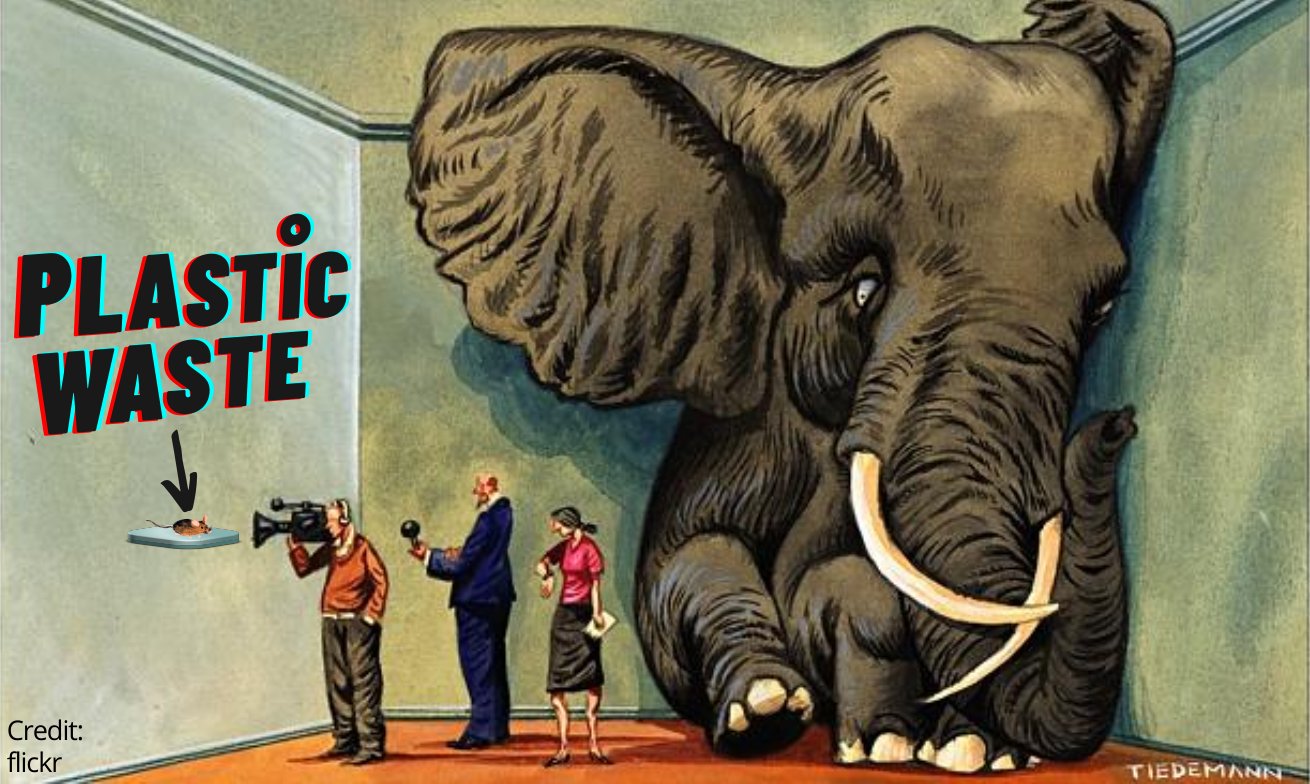
The planet is on fire because we are burning plastics, there are millions - or perhaps billions - of tonnes of plastic that accumulate in the oceans, plastic waste takes hundreds or maybe thousands of years to degrade or possibly never disappear, it is raining plastic particles that are everywhere in the food we eat so that we are eating plastic for dinner, there will soon be more plastic than fish in the oceans, plastics exterminate marine animals, cocktails of toxic additives in plastics intoxicate the food we are eating that is killing us, plastics release toxic combustion products that pollute the air we breath and destroy our health, do I forget any thing here?
How Much Plastic Is It?
But wait a moment. What quantities are we actually discussing?
The fact is, we know—quite precisely.
Chart 1: Passage of fossil fuel feedstock through the chemical industry in 2017 [1]
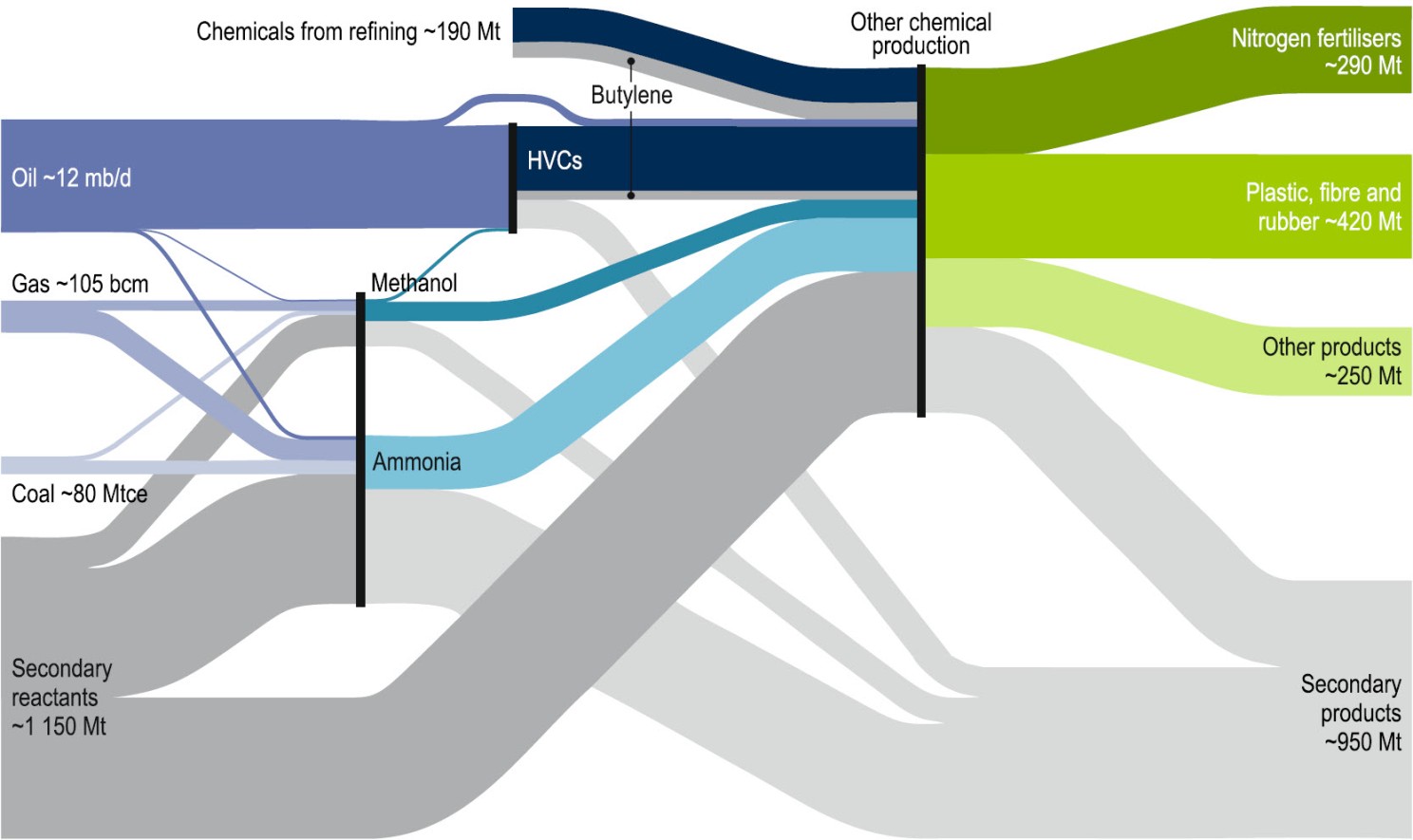
All synthetic plastics, fibers, and rubbers totaled 420 million tonnes in 2017.
The figure sounds substantial—enormous, even monumental.
But is it?
Materials Consumption of the World
How does this compare to global material consumption?
Chart 2: Global Materials Demand [2]
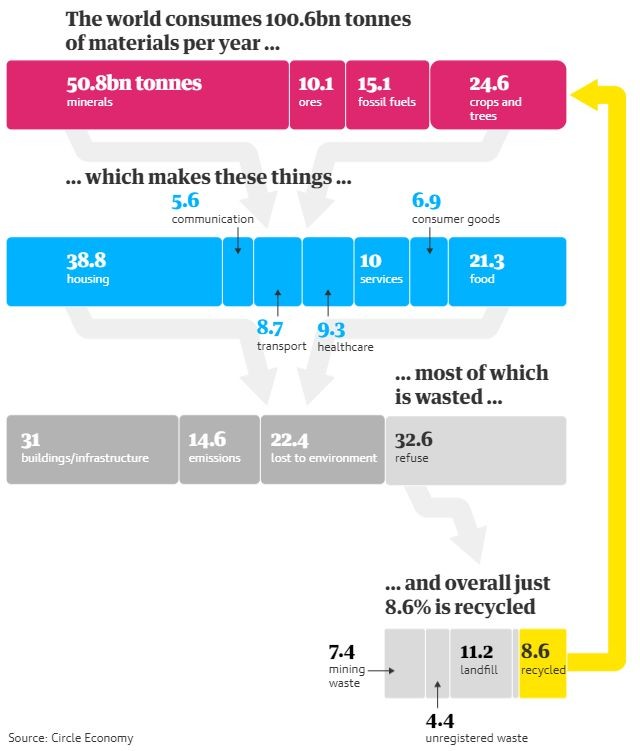
The world consumed 100.6 billion tonnes (100,600 million tonnes) of materials in 2017.
Therefore, all synthetic plastics, fibers, and rubbers represent 420 / 100,600 = 0.4% of the total.
Less than half a percentage point—this is plastics' share of annual consumption relative to minerals, ores, fossil fuels, crops, and timber.
Plastics are derived from fossil fuels—oil, gas, and coal—of which the world consumed 15.1 billion tonnes (15,100 million tonnes) in 2017.
Here again, plastics account for only 420 / 15,100 = 0.028, or 2.8% of annual fossil fuel production.
Less than 3% represents plastics' share of annual fossil fuel demand—approximately 5% when production energy requirements are factored in[1].
Drowning in Plastics, Really?
One could argue—and many do—that plastic waste pervades the ecosphere: invading environments, contaminating soils, clogging waterways, polluting oceans, and degrading air quality. In short, plastic appears to be the only waste that matters because it is the only waste we notice.
While comprehensive global statistics may be unavailable, data from the United Kingdom provide perspective.
Chart 3: Waste generation by waste material, United Kingdom, 2016 [3]
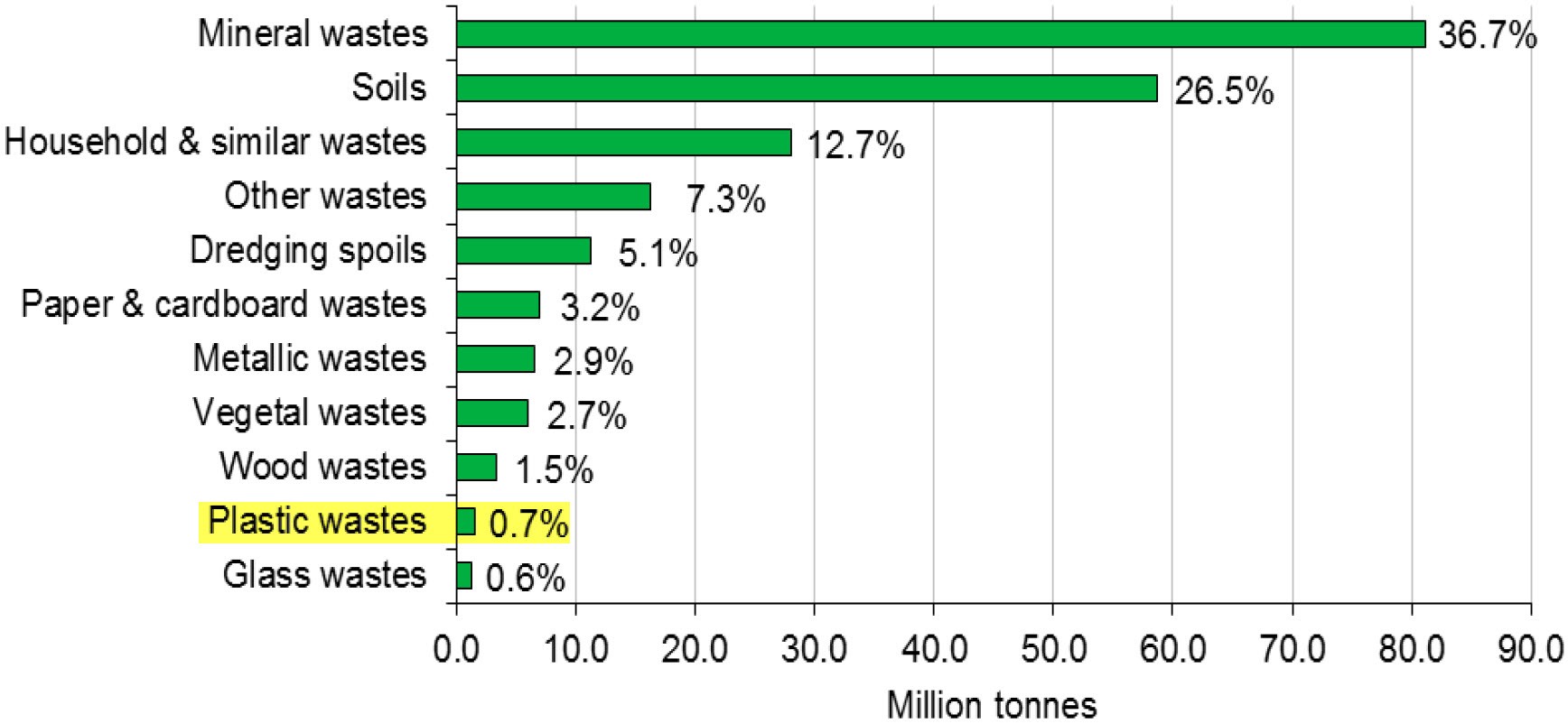
Plastic waste represents just 0.7% of all waste generated in the UK annually, a proportion reasonably representative of the global average.
This is 4.5 times less than paper waste, which demonstrates a significantly more detrimental carbon footprint according to numerous life cycle assessment (LCA) studies, including 18 reviewed on the Plastics Paradox website [4].
Plastics Are Taking Our Breath Away
Finally, plastics are frequently cited as contributors to global warming through CO₂ emissions from waste-to-energy incineration.
Let us examine the calculations:
- Global synthetic polymer production annually: 420 million tonnes (Mt) [1]
- Carbon content: 307 Mt per year (Mtpy), approximately 73% [5]
- CO₂ equivalent amount: 1,126 Mtpy or 1.13×10⁹ metric tonnes
- CO₂ weight in the atmosphere: 3,227 billion tonnes (MMt) or 3.23×10¹² tonnes [6]
- Ratio of CO₂ from burning plastics to atmospheric CO₂: 0.035%
- CO₂ concentration in the atmosphere: 414 ppm [6]
- CO₂ emissions from burning all annual plastic production: 0.145 ppm
To be clear: if all synthetic polymers produced annually were incinerated, they would add only 0.145 ppm of CO₂—or 0.035%—to the existing 414 ppm in the atmosphere.
This calculation precedes consideration that only approximately 12% of plastics produced globally are incinerated annually—a figure frequently cited by environmental advocates. Conversely, this means 88% of used plastics are not burned, reducing actual emissions from plastic incineration to 0.145 × 12% = 0.017 ppm.
To reiterate: "the alarming amount of plastic that is burned" annually contributes 0.017 ppm of CO₂ to the atmosphere. At this rate, it would require 58 years to add a single additional ppm of CO₂ to the atmosphere.
Surely this warrants serious concern?
Plastic, the Wonder Material
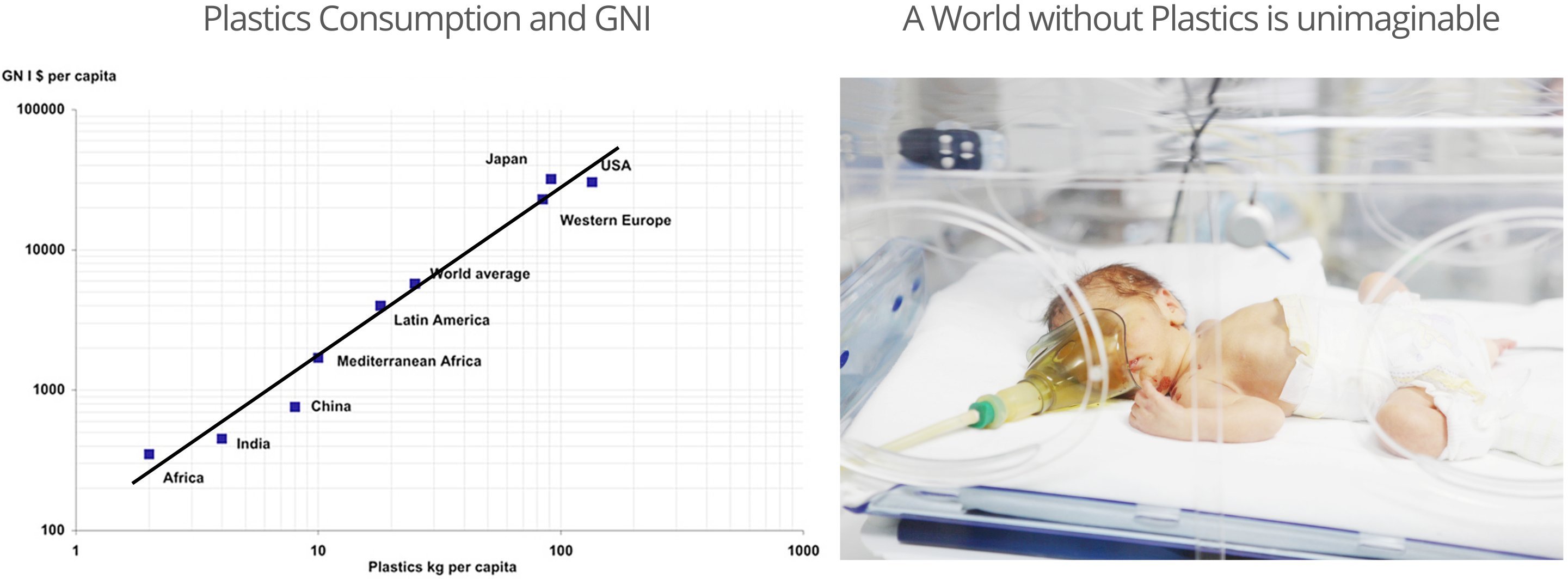
The reality is that plastic consumption correlates with progress. The more economically developed a country (measured by GNI per capita), the higher its per capita plastic consumption (on a log-log scale) [8]. Plastics represent a technological achievement delivering invaluable services to economies and populations worldwide. They have contributed disproportionately to human flourishing, economic growth, health improvements, and wealth generation. A world without plastics is unimaginable—modern society could not function in their absence. Therefore, resist the alarmist, agenda-driven propaganda of anti-plastic campaigners. I remain unmoved, and you should too.
Chart 4: Plastics Consumption: a Hallmark of Progress [4]
_______________________________________________________________________________________________________________________________________________________________
References
- International Energy Agency, The Future of Petrochemicals, Technology Report, Oct 2018
- Circle Economy, The Circularity Gap Report 2020
- Department for Food, Environment, and Rural Affairs, 19 Mar 2020, UK Statistics on waste
- plasticsparadox.com, Plastics And The Environment
- Calculation based on the carbon content of the most common plastic materials.
- Nicolas Kokel, 26 Aug 2020, AFYWB 6. There is Presently Only Six Times More Carbon in the Earth Atmosphere than in all the Terrestrial Plants Biomass
- inhabitat.com, 21 May 2019, New report reveals 70 million metric tons of plastic burned worldwide each year
- Pardos Marketing, Just for Fun, Plastics Consumption and GNI