
Product
Bituminous Coal
Names
Steam coal
Insight Articles
#PS158
Main Product
Coal
Segment
Extractive Industry Products
Main-Family
Fossil Hydrocarbons
Sub-Family
Solid Feedstock
Physical State

Solid

Description

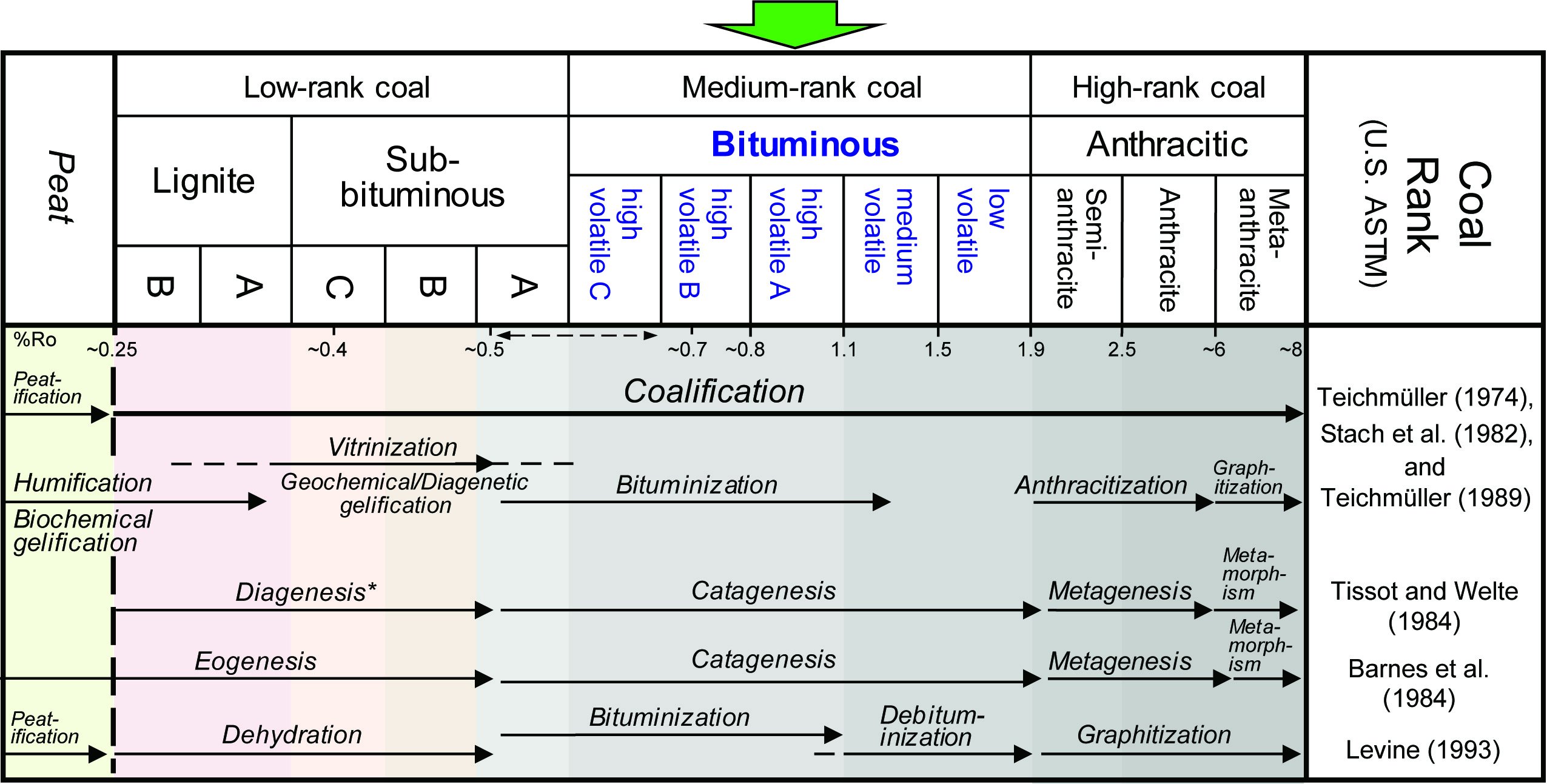
Bituminous coal is a medium-rank coal with 45-86% carbon content, intermediate between sub-bituminous coal and anthracite. It appears as a dense, black sedimentary rock with a shiny luster and distinctive banding or layering, characterized by the presence of bitumen* (mineral tar) that causes the coal to soften, swell, and form a sticky mass when heated.


Bituminous rank and defining characteristics [5]

Physical and Chemical Properties

Bituminous coal has a calorific value ranging from 5,700-7,900 kcal/kg (23-33 MJ/kg), with moisture content between 2-17% and ash content up to 12%. The coal contains volatile matter ranging from 14-31% depending on grade (high-volatile, medium-volatile, or low-volatile classifications), with fixed carbon content of 69-86%. Typical composition includes approximately 84.4% carbon, 5.4% hydrogen, 6.7% oxygen, 1.7% nitrogen, and 1.8% sulfur by weight. Its Mohs hardness is 2-2.5, and bank density is about 1,346 kg/m³.

Combustion Characteristics

The coal burns with a characteristic smoky flame and exhibits agglomerating properties during combustion. Medium to low volatile bituminous coal is often "gassy" due to peak methane generation during bituminization, requiring safety precautions against methane explosions. When used for metallurgical purposes, most bituminous coals undergo softening, coalescence, swelling, and fluidity during carbonization before hardening, though coals near lignite or semi-anthracite rank do not exhibit these plastic characteristics.


*Note: Bituminous coal contains naturally-formed bitumen (mineral tar/asphalt) trapped within its structure during coalification. This coal-bound bitumen is chemically similar to petroleum bitumen but cannot be extracted. Upon heating, it causes the coal to soften and agglomerate. When coal is carbonized (450-900°C), volatile components including tar vapors are released and condensed to produce coal tar, which is further processed into coal tar oils and coal tar pitch."

References

  1. Wikipedia. Bituminous coal (page version: Jan 15, 2026)
  2. Kopp O.C.. bituminous coal (page version: Jul 17, 2019)
  3. Satyendra. Bituminous coal (Sep 17, 2018). Ispat Guru
  4. Vedantu. Bituminous coal (May 17, 2021)
  5. Kentucky Geological Survey, University of Kentucky. Bituminous Coal

Insight Articles
Your insights will be shown here

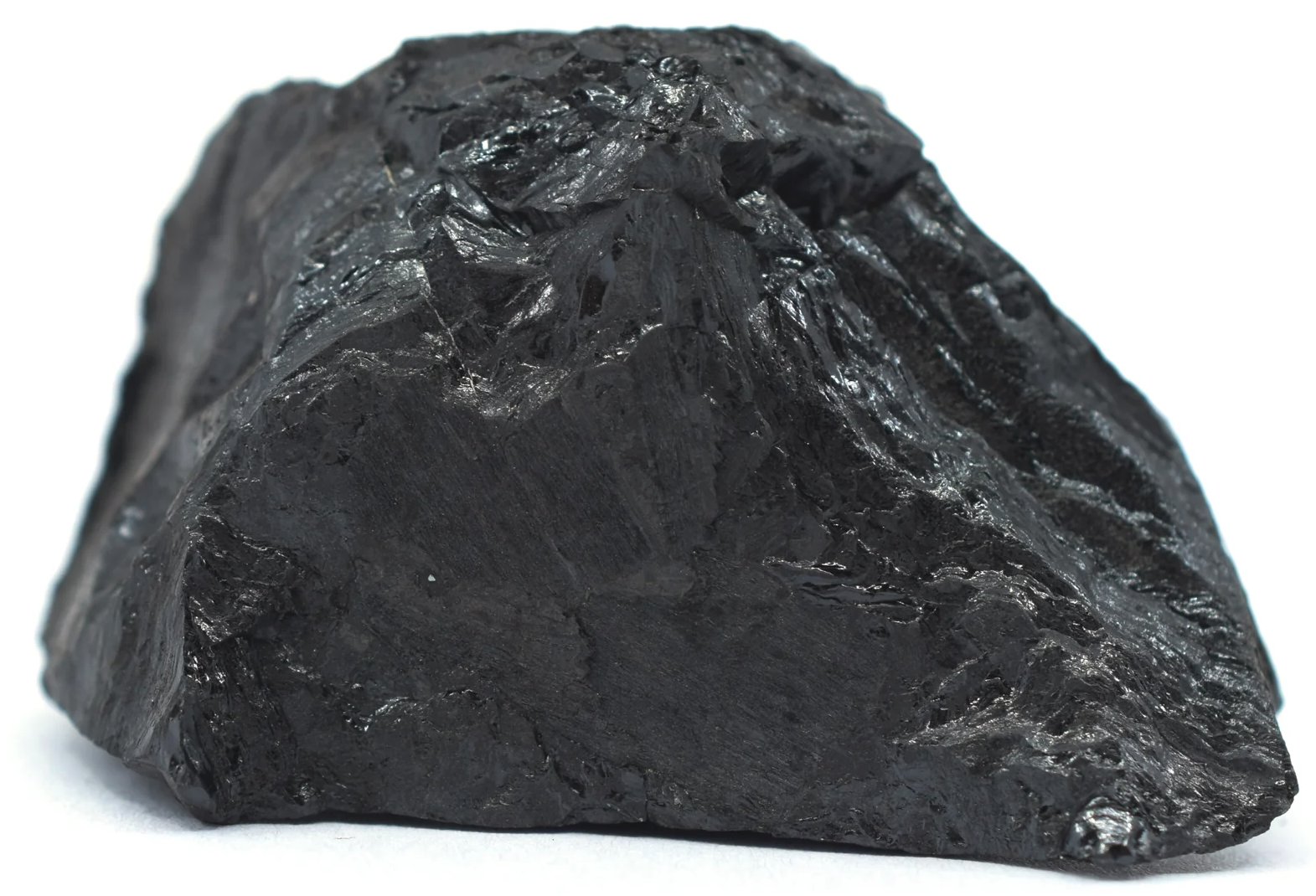
Raw Bituminous Coal, Rock Specimen, 1" https://www.eiscolabs.com/products/esng0030
  Product Communicator
Title Date
  UserPic Featured product: bituminous coal 1/23/2026
Identifiers

No Identifiers defined

Chemical Data

Specific Gravity
1.00
Crude Data

API Gravity
10
Country
Product Settings

Default
Status
A
Content provided by
Transaction Name Date
Modified by UserPic   Kokel, Nicolas 1/23/2026 8:14 AM
Added by UserPic   Kokel, Nicolas 9/28/2021 8:00 AM