Product
Bisphenol A-Polycarbonate
Segment
Chemicals
Main-Family
Polymers
Sub-Family
Polycarbonate
Link
Insight Articles
#PS119

Description

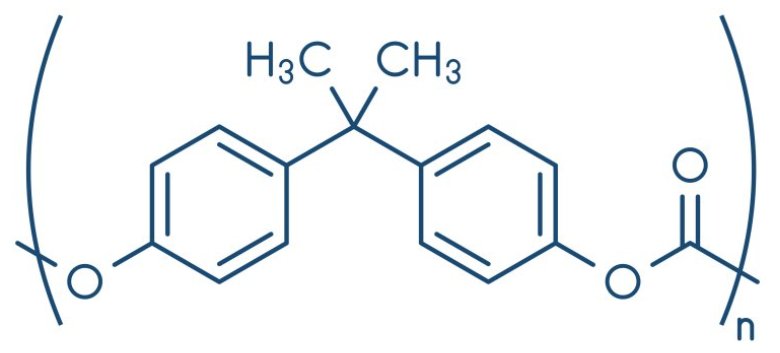
Polycarbonate is most commonly formed with the reaction of bis-Phenol A (produced through the Condensation of Phenol with Acetone under acidic conditions) with Carbonyl Chloride (Phosgene) in an Interfacial Process.

Polycarbonates are strong, stiff, hard, tough, transparent Engineering Thermoplastics that can maintain rigidity up to 140°C and toughness down to -20°C or special grades even lower. The Material is amorphous (thereby displaying excellent mechanical properties and high dimensional stability), is thermally resistant up to 135°C and rated as slow burning. Special Flame Retardant Grades exist which pass several severe flammability tests.

Constraints to the use of PC include limited chemical and scratch resistance and it's tendency to yellow upon long term exposure to UV light. However these constraints can be readily overcome by adding the right additives to the Compound or Processing through a Co-Extrusion Process.

Source: British Plastics Federation, Polycarbonate (PC)


Insight Articles
Your insights will be shown here

Polycarbonate Molecular Structure https://www.bpf.co.uk/plastipedia/polymers/polycarbonate.aspx
  Product Communicator
 (*=Default)
Settings

Status
A
Unit of Measure
Metric Ton
Physical State

Solid

Building Block / Value Chain Info

Value Chain-I
Benzene
Value Chain-II
Propylene
Content provided by
Transaction Name Date
Modified by UserPic  Kokel, Nicolas 12/5/2023 6:23 AM
Added 4/8/2021 9:38 AM
Map of Bisphenol A-Polycarbonate Products producing locations in ppPLUS

ppPLUS Insights: Please register to view the Map!
Production Analysis