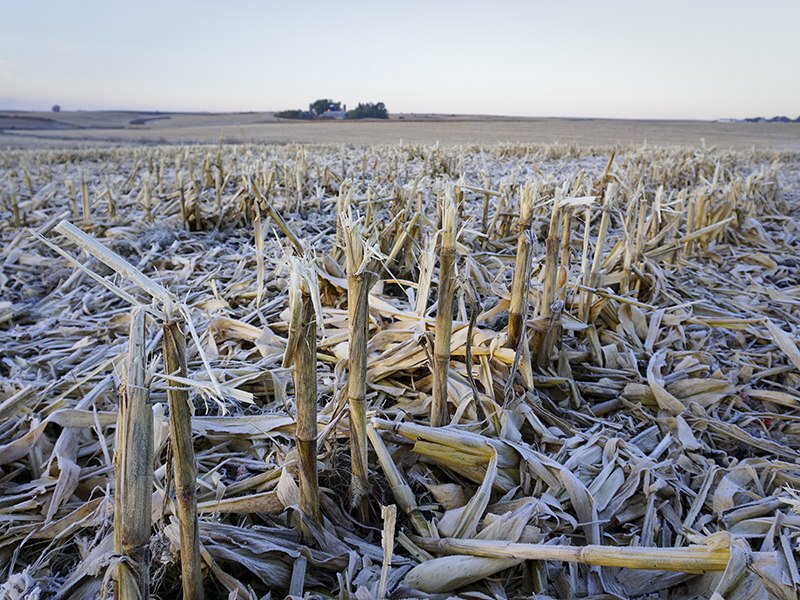
Agricultural field residues are materials left in an agricultural field or orchard after the crop has been harvested. These residues specifically include stalks and stubble (stems), leaves, seed pods, and roots that remain in the field following harvest.
Characteristics and Components
Field residues encompass the plant materials not harvested or used for human consumption, such as corn stalks after corn harvest, wheat straw and stubble after grain collection, rice straw remaining in paddies, soybean stems, cotton stalks, and pruned branches and leaves from orchards and vineyards. The amount and type of field residue varies depending on the crop type, growth conditions, tillage method, and harvesting technique.
Management Practices
Field residues can be managed through several approaches. They can be plowed or tilled directly back into the ground to incorporate organic matter, burned (though this practice is declining due to environmental concerns), or left as protective cover using conservation practices like no-till, strip-till, or reduced-till agriculture that maximize residue retention. The residues can also be collected for use as animal fodder or for other applications.
Agronomic Functions
When properly managed, field residues provide multiple benefits for soil health and farm productivity. They increase irrigation efficiency, control erosion by reducing the impact of raindrops on soil surfaces, improve soil structure and fertility as they decompose, enhance water retention and holding capacity, and add organic matter and nutrients back to the soil. The decomposing residues also promote beneficial soil organisms such as earthworms and microbes.
Biofuel Feedstock Applications
Field residues such as straw from grain crops serve as lignocellulosic feedstocks for biofuel production. These materials are considered sustainable biofuel sources because they use waste materials from food crop production and do not compete with food crops for land. Common conversion pathways include wheat straw or corn stover to cellulosic ethanol via pretreatment, hydrolysis and fermentation; agricultural wastes to biomass-to-liquid fuels via thermochemical pathways; and mixed agricultural wastes to bio-crude via pyrolysis. Research suggests that 20 to 25 percent of field residues can typically be removed for biofuel production while maintaining soil fertility and yields.
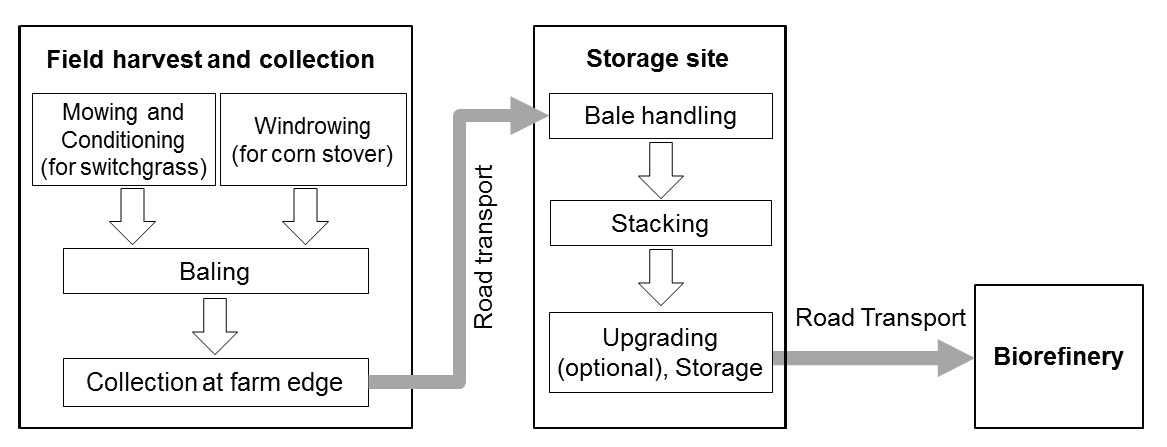
Figure 1 - Feedstock logistics for agricultural residues and energy crops for the cellulosic biorefinery
References
- Mandako. What are crop residues? (Jul 3, 2024)
- Sustainability Directory. Agricultural Residues (Dec 1, 2025)
- Wikipedia. Crop Residue
- Ranga.nr. Crop Residues, their Types, Management and Uses (May 23, 2025). Farm Practices
- ScienceDirect. Agricultural Residues
- Caicedo M. et al.. Redefining Agricultural Residues as Bioenergy Feedstocks. Materials (Basel). 2016 Jul 28;9(8):635. DOI: 10.3390/ma9080635. PMID: 28773750; PMCID: PMC5509081
- Manandhar, A. & Shah A.. FABE-660.4: Feedstock Logistics for Agricultural Residues and Energy Crops: Moving Biomass from the Field to Biorefinery Gate (May 25, 2018). Ohioline
- ETIP Bioenergy. Agricultural residues as feedstocks for biofuels production