Podcast Part 3 of the Indian Dream Refinery Project - Technology Selection & Project Front-End Engineering
Podcast Part 3 of the Indian Dream Refinery Project - Technology Selection & Project Front-End Engineering
Podcast Part 3 of the Indian Dream Refinery Project - Technology Selection & Project Front-End Engineering
Podcast Part 3 of the Indian Dream Refinery Project - Technology Selection & Project Front-End Engineering
Podcast Part 3 of the Indian Dream Refinery Project - Technology Selection & Project Front-End Engineering
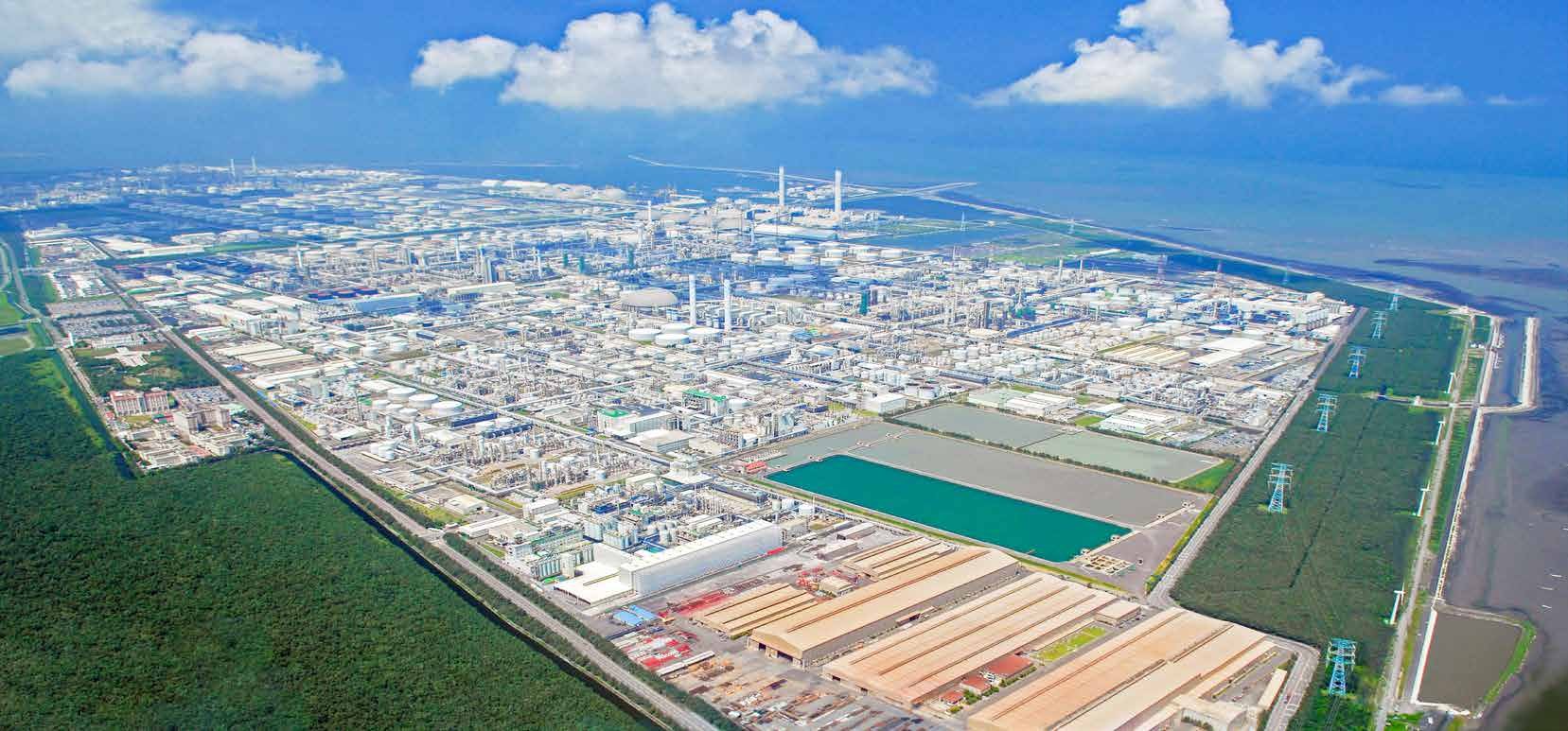
Formosa Petrochemical Corporation (FPCC) has taken the unprecedented step of extending the shutdown of its 700,000 tonnes/year No. 1 naphtha cracker at the Mailiao Complex indefinitely, marking the first time in the company's history that a cracker will remain offline for more than a year. The unit, which has been shut since September 2025, will not restart as FPCC confronts what spokesperson KY Lin describes as structurally unviable derivative margins.
This decision removes nearly 25% of FPCC's total ethylene capacity of 2.935 million tonnes/year and reduces Taiwan's naphtha import requirements by approximately 37.5 million barrels annually. Beyond the indefinite closure, FPCC is considering temporarily shutting its 1.035 million tonnes/year No. 2 cracker for several months while pushing its 1.3 million tonnes/year No. 3 unit to 100% utilization—both currently running at 70-75% capacity.
The Mailiao complex typifies the mounting pressures facing naphtha-based crackers across Asia, compounded by structural feedstock imbalances. FPCC's integrated model combines 540,000 barrels/day (25 million tonnes/year) crude oil refining capacity with 2.935 million tonnes/year ethylene production from three naphtha crackers. However, the complex's 3.75 million tonns/year naphtha production capacity—representing approximately 15% of crude oil throughput—is insufficient to supply the crackers, which require approximately 8.8 million tonnes/year of naphtha feedstock based on typical cracking yields.
This 5 million tonne/year naphtha deficit forces FPCC to import substantial volumes of naphtha and LPG as supplementary cracking feedstock, exposing the operation to international naphtha pricing volatility and eliminating the cost advantages of vertical integration. Beyond this structural disadvantage, naphtha-fed units face fundamental competitive pressures from ethane-based crackers in North America and the Middle East, as well as China's increasingly competitive coal-to-olefins routes.
FPCC is retrofitting its No. 3 cracker to process cheaper ethane feedstock beginning in 2027, acknowledging that naphtha-based production economics are no longer sustainable in the current market environment.
The core challenge facing Taiwan's petrochemical sector stems from relentless capacity expansion in mainland China. In 2025, China added nearly 10 million tonnes/year of new ethylene capacity, bringing total capacity to approximately 62 million tonnes/year. By 2024, China's ethylene capacity had already reached 53.8 million tonnes/year, including 13.42 million tonnes from coal-to-olefins.
This expansion has created severe oversupply in commodity petrochemical grades, precisely the products that form the core of Taiwan's export-oriented production model. China's "anti-involution" campaign targeting inefficient capacity is expected to retire only about 6 million tons/year of small cracker units (12% of current capacity), while promoting shifts toward specialty chemicals—offering minimal relief to the oversupply crisis.
Taiwan's petrochemical exports face the additional burden of trade policy constraints. Approximately 40% of Taiwan's petrochemical exports by value flow to China and Hong Kong. Since 2024, Taiwan's propylene exports to China have faced tariffs following the suspension of preferential Economic Cooperation Framework Agreement (ECFA) treatment, effectively closing off key markets and squeezing margins for integrated producers like FPCC.
The Petrochemical Industry Association of Taiwan (PIAT) projects Taiwan's crackers will operate at just 60-70% capacity in 2025, with exports forecast to surge 61% as domestic demand remains weak and Chinese market access deteriorates.
FPCC's shutdown decision aligns with broader regional restructuring efforts as Asia's naphtha-based petrochemical sector confronts structural overcapacity.
ExxonMobil plans to permanently close its 900,000 tonnes/year steam cracker 1, operational since 2002 at its Singapore Integrated Manufacturing Complex, by June 2026, winding down operations from March. The closure follows ExxonMobil's startup in July 2025 of a 1.6 million tonnes/year cracker at the ExxonMobil Huizhou Chemical Complex in China, reflecting the strategic pivot toward China's domestic market rather than serving regional exports from Singapore.
South Korea has announced plans to reduce ethylene capacity by 2.7-3.7 million tonnes/year, representing 20-28% of the country's 13 million tonnes/year total capacity. The restructuring focuses on the Yeosu complex, which produces 6.41 million tons/year of ethylene—roughly half of South Korea's total output. Government officials have warned that companies missing December 2025 deadlines for production reductions will be ineligible for support measures.
The operating environment has severely impacted financial performance across the Formosa Plastics Group. FPCC's parent company, Formosa Plastics Corporation, reported a 2025 loss widening to NT$10.05 billion ($318 million) from NT$1.23 billion in 2024. FPCC's naphtha cracking business saw operating revenue decline 1.2% year-on-year in 2025 despite relatively stable volumes, reflecting the compression in product pricing.
The indefinite shutdown of the No. 1 cracker—rather than scheduling a restart timeline—signals management's assessment that current market conditions represent a structural shift rather than a cyclical downturn. This marks a significant strategic retreat for Taiwan's largest private refiner and petrochemical producer.
The naphtha cracker shutdowns across Taiwan, Singapore, and South Korea represent the beginning of capacity rationalization necessitated by China's oversupply and feedstock cost disadvantages. High-cost naphtha-based capacity in Europe (approximately 4.6 million tons), Japan, and Korea is expected to phase out by 2027, while the Middle East and North America continue leveraging low-cost feedstock advantages.
For FPCC, survival depends on completing the No. 3 cracker ethane retrofit, reducing operating costs at remaining units, and potentially shifting downstream production toward specialty chemicals and polymers with higher margins. The company's decision to potentially idle the No. 2 cracker while maximizing No. 3 utilization suggests management is prioritizing the most efficient assets while permanently retiring older, less competitive units.
The era of Taiwan's naphtha-based commodity petrochemical production serving regional export markets is ending. Companies must either invest in feedstock flexibility, shift to specialties, or face permanent capacity retirement as China's integrated mega-complexes and North American ethane crackers dominate commodity markets.
Note: this article combines our original data analysis and strategic insights wtih analytical synthesis and forward-looking assessment based on industry data from Formosa Plastics Group, Summit International, Reuters, S&P Global, ICIS, Hydrocarbon Processing and others.
#formosa #taiwan #mailiao #steamcracker #ethyleneplant #naphtha

Communicator
Add Message