ENEOS Emerges as Leading Bidder for Chevron's Singapore Refinery Stake

- Site
- Singapore Refinery

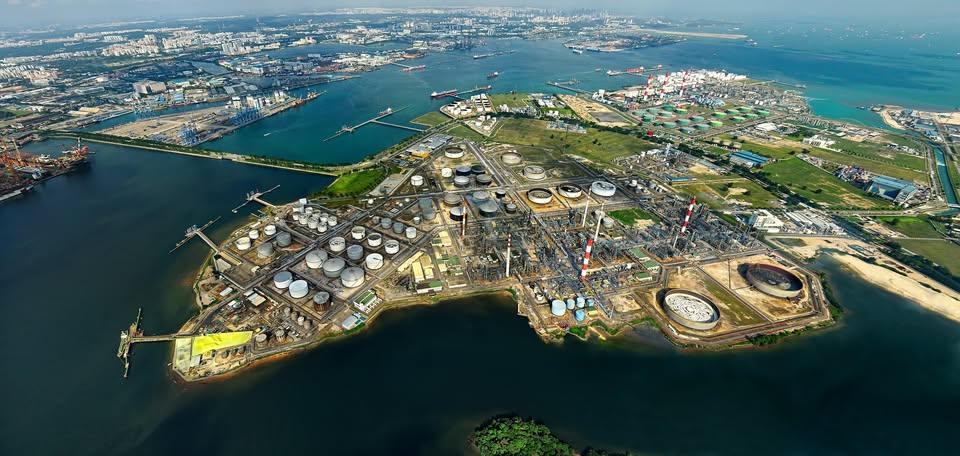
SRC refinery aerial view | Credit: SRC Facebook page (Dec 23, 2022)
ENEOS faces competition from global commodity traders Glencore and Vitol, both of whom submitted formal bids earlier in the year when Chevron invited non-binding offers through its financial adviser, Morgan Stanley. While the transaction is reportedly nearing completion, industry observers caution that delays remain possible and no final agreement has been announced. PetroChina, which owns the remaining 50% of SRC through its Singapore Petroleum subsidiary, retains first right of refusal on Chevron's stake, adding a layer of complexity to negotiations.
The acquisition aligns with ENEOS' broader international expansion strategy, articulated by CEO Tomohide Miyata in mid-2025, when the company announced plans to pursue overseas oil assets valued at around $1 billion. This outward-looking approach contrasts sharply with ENEOS' domestic trajectory, where the company has systematically reduced refining capacity from 1.74 million barrels per day in 2023 to 1.64 million barrels per day by 2025, closing underutilized facilities including the Wakayama and Negishi refineries. Japan's shrinking petroleum demand—driven by vehicle electrification and population decline—has forced ENEOS to seek growth opportunities in more resilient regional markets, particularly Southeast Asia where fuel consumption continues to expand.
Singapore's strategic importance to ENEOS extends beyond refining economics. As Asia's largest oil trading hub and the world's busiest bunkering port, Singapore offers ENEOS direct access to refined product blending, re-export infrastructure, and proximity to growth markets in Indonesia, Malaysia, and Thailand. The SRC refinery's 290,000 barrels-per-day capacity on Jurong Island would complement ENEOS' existing trading operations in the Asia-Pacific region, which the company has identified as a priority destination for oil product exports. Furthermore, acquiring SRC would position ENEOS alongside Glencore and Indonesia's PT Chandra Asri Petrochemical—which jointly purchased Shell's Bukom refinery in 2024—as part of a new cohort of operators reshaping Singapore's refining landscape following the withdrawal of Western majors.
The competitive dynamics of the bidding process reflect divergent strategic motivations among the suitors. Glencore's interest stems from its ambition to expand physical refining assets beyond South Africa, leveraging Singapore as one of its three global oil marketing hubs alongside London and New York. Vitol, meanwhile, views SRC as an opportunity to integrate refining capacity with its dominant position in global oil trading. ENEOS, however, brings a unique advantage: operational expertise in managing complex refining portfolios and a demonstrated commitment to long-term asset optimization rather than short-term financial arbitrage. This operational focus may appeal to PetroChina, which must approve any transaction under its first-refusal rights and could prefer a partner with technical refining capabilities over pure trading entities.
Chevron's divestment decision, announced in June 2025, forms part of a broader global restructuring aimed at reducing costs and shedding non-core downstream assets. The company's exit follows Shell's 2024 sale of its Singapore refinery to Glencore-Chandra Asri, marking the second withdrawal by a Western oil major from the city-state within 18 months. These strategic retreats underscore the structural pressures facing independent refiners in Asia, where Chinese mega-refineries have captured market share through scale advantages, access to discounted Russian crude, and vertical integration with petrochemical production. For Chevron, retaining a 50% stake in a mid-sized Singapore refinery offered limited strategic value compared to its upstream and LNG investments in the region.
ENEOS' potential acquisition carries financial and operational risks. The company reported a 22% decline in net profit for the fiscal year ending March 2025, with projections indicating an additional 18% drop in the current fiscal year. To counter these headwinds, ENEOS aims to raise refinery utilization rates—excluding scheduled maintenance—from 78% in fiscal 2024 to 90% by fiscal 2027, a target that requires securing stable feedstock supplies and export markets. SRC's established infrastructure and product slate could support this utilization goal, but only if ENEOS successfully integrates the asset into its regional supply chain and navigates Singapore's high operating costs relative to newer Chinese facilities.
The outcome of the SRC bidding process will signal whether Japanese refiners can achieve sustainable international expansion amid energy transition pressures, or whether Singapore's refining sector will consolidate further under the control of commodity traders and Asian national oil companies. For ENEOS, success in this transaction would validate its strategy of offsetting domestic decline through selective overseas investments, while failure could force a reassessment of its regional ambitions and accelerate its pivot toward LNG and sustainable aviation fuels.
Note: This article draws on reporting from Bloomberg News, Reuters, Rigzone, Fuels & Lubes, The Japan Times, S&P Global Platts, H2-Tech, The Straits Times, Argus Media, Enerdata, AInvest, Commoplast, and Hydrocarbon Processing. These sources provided coverage of ENEOS' bidding strategy, Chevron's divestment process, refinery valuation details, ENEOS' domestic capacity adjustments, and the broader competitive dynamics in Singapore's refining sector.
#refinery #refining #sustainability #eneos #chevron #src #shell #bukom