Ghana's Tema Oil Refinery Returns to Operation After Six-Year Hiatus

- Site
- Tema Oil Refinery

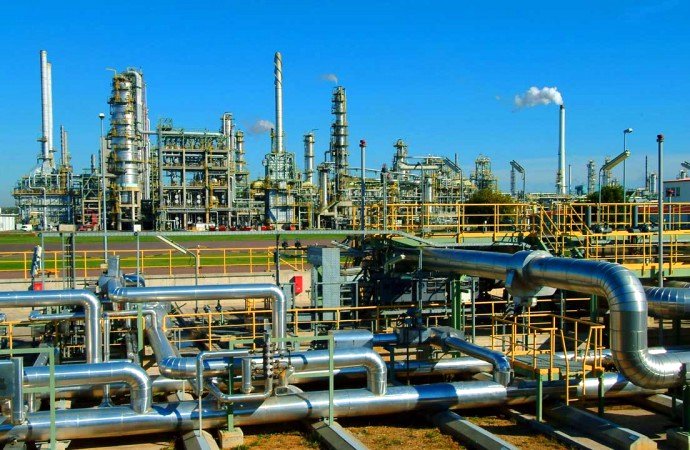
Tema Oil Refinery | Credit: CITI NEWSROOM
Operational Status
The 45,000 barrel per stream day (bpsd) refinery is currently operating at approximately 28,000 bpsd, with all product streams flowing to storage for the first time in several years. The facility's storage infrastructure includes capacity for 260,000 tonnes of white products and 1.93 million barrels of crude oil. Site visits in late December confirmed active refining operations, with visible stack emissions near the CDU and operational utility stations.
Capacity Expansion Plans
TOR has completed installation of a new furnace designated F-61, which awaits formal commissioning and integration into the atmospheric distillation unit (ADU). Once operational, this upgrade will restore refining capacity to the original nameplate design of 45,000 bpsd. Medium-term expansion plans include raising CDU capacity to 60,000 bpsd and replacing the existing 6,500 bpsd catalytic reformer with a 10,000 bpsd continuous catalytic reformer unit.
The Tema Oil Refinery confirmed its technical capability to process Ghana's domestically produced Jubilee crude, which is classified as sweet crude matching TOR's design specifications. The facility previously refined Jubilee crude successfully during 2015-2016 operations.
Operational Reforms and Regulatory Clearance
TOR Managing Director Edmond Kombat implemented comprehensive operational reforms under the government's "reset agenda," utilizing Fish Bone Analysis framework and stakeholder mapping to address systemic challenges. Key interventions included resolving staff promotion backlogs affecting over 250 employees from more than 300 cases reviewed, introducing strict cash management protocols, extending terminal loading hours, and establishing enhanced accountability measures for product handling.
The National Petroleum Authority (NPA) conducted regulatory inspections and issued clearance for operations after confirming compliance with all mandatory safety and operational requirements following the TAM completion. The refinery now supports approximately 1,000 employees and their dependents, providing benefits including medical care.
Strategic Impact
The restart addresses Ghana's growing dependence on petroleum product imports, which exceeded 165,000 bpsd in 2025 according to Kpler data. Clean product imports more than doubled since 2017 to 128,000 bpsd this year, including 65,000 bpsd diesel/gasoil and 52,000 bpsd gasoline, with Nigeria's Dangote refinery emerging as the largest supplier at 27,000 bpsd.
The Institute for Energy Security (IES) described TOR's revival as "far more than the restart of a refinery" but rather "the revival of a strategic national asset and a critical turning point in Ghana's downstream petroleum sector". The facility, which commenced operations in 1963 as one of Africa's first eight refineries, features a 14,000 bpsd Residue Fluid Catalytic Cracker (RFCC) unit alongside its primary CDU.
Note: This article was compiled from multiple industry and news sources reporting on TOR's December 2025 restart. Primary sources included Argus Media's market coverage, Hydrocarbon Processing industry reports, Tank Terminals trade publication, and Ghana-based outlets MyJoyOnline and GhanaWeb. Additional context on facility specifications and historical operations was obtained from TOR's official website, LinkedIn profile, and State Interests and Governance Authority documentation.
#ghana #tor #temaoilrefinerie #cdu #crudeoil #refinery #jubileecrude