Podcast Part 3 of the Indian Dream Refinery Project - Technology Selection & Project Front-End Engineering
Podcast Part 3 of the Indian Dream Refinery Project - Technology Selection & Project Front-End Engineering
Podcast Part 3 of the Indian Dream Refinery Project - Technology Selection & Project Front-End Engineering
Podcast Part 3 of the Indian Dream Refinery Project - Technology Selection & Project Front-End Engineering
Podcast Part 3 of the Indian Dream Refinery Project - Technology Selection & Project Front-End Engineering
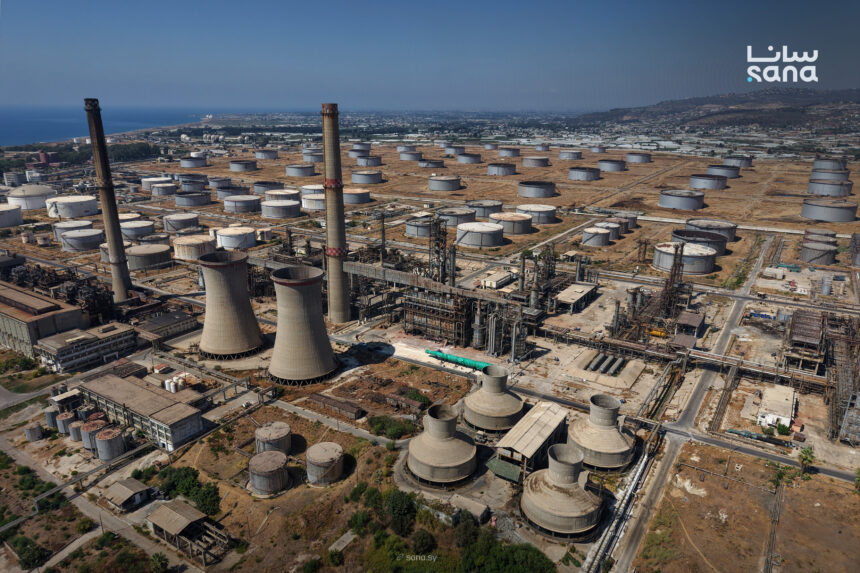
Article Image: Baniyas Refinery in Tartus | Credit: Syrian Arab News Agency (Sep 9, 2025)
Syria currently operates only one major refinery following the announced closure of the Homs facility. The Baniyas refinery, located north of the coastal city of Baniyas, has a reported capacity ranging from 120,000 to 130,000 bpd but is currently operating at only 95,000 bpd due to facility degradation and maintenance issues. The Homs refinery, which had an estimated capacity of approximately 100,000-120,000 bpd, is no longer in operation. In November 2025, the Syrian Petroleum Company announced plans to completely dismantle the existing Homs refinery and construct a new modern facility approximately 50 kilometers from Homs, with the old site to be repurposed for residential development.
The Baniyas refinery was taken offline in December 2024 when Iran suspended crude oil shipments following the fall of the Assad regime, but operations resumed in 2025 after Russia provided alternative crude supplies and the US and EU issued sanctions waivers. The facility is connected via pipeline to oil fields in Deir ez-Zor and Al-Hasakah governorates in eastern Syria.
Syria's current total oil production capacity is estimated at approximately 120,000-130,000 bpd, a dramatic decline from pre-war levels when the country exported 380,000 bpd in 2010. The country's major oil-producing regions include Deir ez-Zor (estimated 1.1 billion barrels in reserves across 12 fields), Al-Hasakah (1.3 billion barrels oil equivalent across 12 fields), and the Qamishli-Al-Malikiyah border region (4.5 billion barrels oil equivalent across 25 fields). The transitional government is negotiating with the Syrian Democratic Forces to secure crude supplies from northeastern fields and has established committees to assess operational readiness of these facilities.
In parallel with the refinery construction, Syria has launched offshore natural gas exploration programs in the Mediterranean Sea, with five new coastal exploration blocks identified for development. The Syrian Petroleum Company signed a memorandum of understanding with US-based ConocoPhillips and Nova Terra Energy in November 2025 to develop existing gas fields and fund new exploration programs. Energy Minister al-Bashir indicated that Syria has signed several contracts with Saudi, Qatari, and Emirati companies for gas exploration and production. Syria's proven natural gas reserves total approximately 8.5 trillion cubic feet, with daily non-associated gas output averaging around 250 million cubic meters.
Note: This insight on Syria's refining sector was developed using information from Hydrocarbon Processing, S&P Global Commodity Insights, Offshore Technology, and Enab Baladi. Additional details came from regional outlets including TASS, Arab News, Anadolu Agency, Al Mayadeen, and Syrian state media SANA, along with technical sources from MEED and the U.S. Energy Information Administration.

Communicator
Add Message